 Bitcoin Price Today, Nov 25: BTC Slips Back Under $60,000 as ETF Outflows Hit a Record Month
 Pudgy Penguins Are Holding the Line While the NFT Market Bleeds — Floor Check, Nov 25
 Aptos Is Down 20% in a Week — APT at $0.37 While Its Stablecoins Boom
 Tron Price Today, Nov 25: TRX Barely Moves at $0.31 — The Steadiest Coin in a Red Market
 Restaking Cools Off: Renzo’s ezETH and the Restaking Tokens Nobody Talks About Anymore
 Cardano Price Today, Nov 25: ADA Back at $0.14 as the November Slide Refuses to End
 Dogecoin Price Today, Nov 25: DOGE Slips to $0.055 as Memecoins Lose Their Bounce
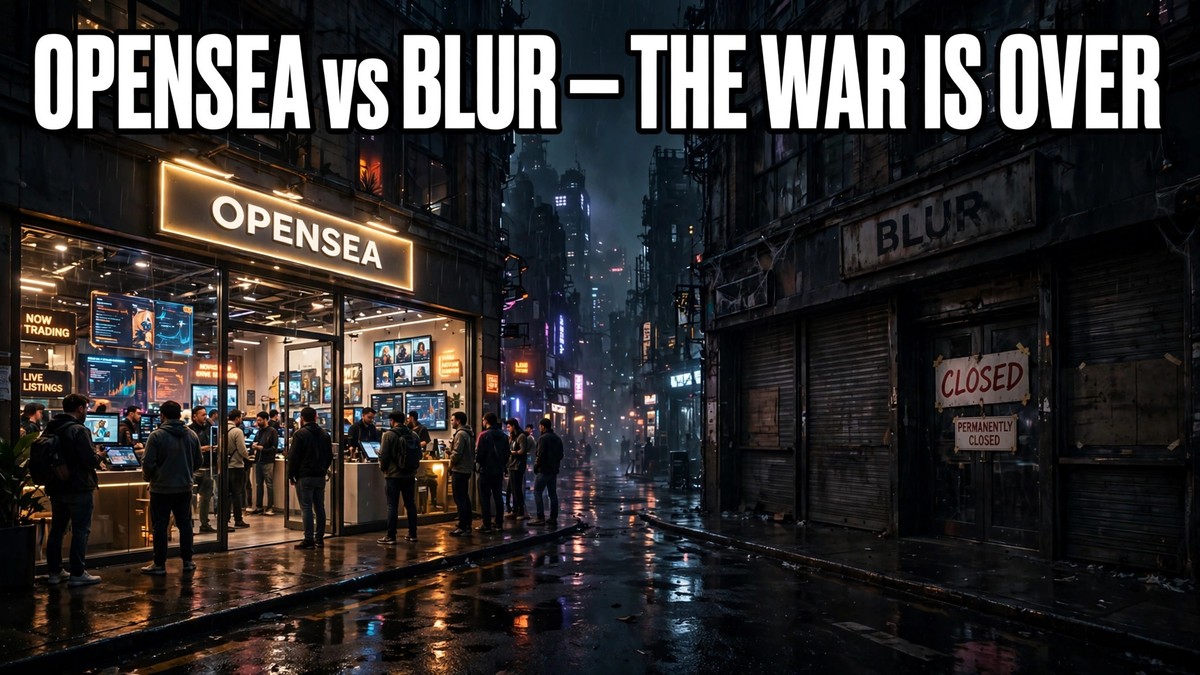
There was a time when OpenSea versus Blur was the fiercest fight in NFTs. Two marketplaces, two philosophies, billions of dollars in volume swinging between them every month. That war is over now — and it did not end with a bang. It ended with one side quietly closing its doors.
On November 12, 2026, Blur shut down its website and its Blend NFT lending service, leaving only its smart contracts running on-chain. The marketplace that once commanded more than 70% of NFT trading volume is gone as a place you can actually visit and trade.
💵 From $1.43 billion to almost nothing
Blur’s fall is one of the sharpest in crypto history. In March 2023, it processed about $1.43 billion in monthly volume. By March 2026, that figure had collapsed to under $7 million — a drop of more than 99.5%. The BLUR token tells the same story: near $0.012 in mid-October, down more than 99% from its all-time high of $5.02.
Blur was built for professional traders — zero marketplace fees, batch buying, collection bids, real-time floor analytics, and the Blend lending protocol. For a while, that was exactly what the market wanted. But professional traders follow volume, and volume follows attention, and attention left NFTs. When the speculators went, Blur’s edge went with them.
Late-October tracking caught the fade in real time: OpenSea held about 73% of seven-day marketplace dollars, around $4.99 million, while Blur sat near 20% at roughly $1.21 million — and falling fast, down about 38% week over week. Two weeks later, the website was dark.
📈 OpenSea: the last one standing
OpenSea’s survival was not an accident. The platform rebuilt itself as OS2 — more than 20 chains, a 1% fee, a full user-experience overhaul — and it bet on the casual collector while Blur bet on the pro. When the SEA token was announced in February 2025, traders flooded in to qualify for the airdrop, and OpenSea’s share jumped from about 25.5% to 71.5% in a single week.
The volume figures vary by tracker and by month, so treat any single number with care — one comparison puts OpenSea at roughly $69 million in monthly volume as of September 2026, holding about 70% of Ethereum-based NFT trading, while other trackers cite far higher figures from earlier in the year. What the trackers agree on is the direction: OpenSea now has around 382,000 monthly active users against Blur’s roughly 38,300 before the shutdown. Ten to one. That is not a competition anymore.
OpenSea is not thriving in the old sense — nobody in NFTs is. But it is operating, it is taking in volume, and it is the only fully operational major marketplace with measurable activity left. In this market, that is winning.
⚠️ What the quiet ending really means
The strange thing about this war is how quietly it ended. There was no final battle, no dramatic collapse, no scandal. Blur simply ran out of traders, announced its closure in October, and switched the lights off in November.
That quiet is the real story. The NFT market did not die in a crash — it faded, month by month, until even the best-built trading machine in the space could not pay its way. The platforms that survive now are the ones with the broadest users, the simplest experience, and the patience to wait for the market to come back.

🎯 What to watch next
Watch where Blur’s old users go. Most of its remaining volume is expected to drift to OpenSea, since the two served the same Ethereum collectors — and if OpenSea’s share climbs further, its grip on the market only tightens. Watch the fees too: Blur charged 0%, OpenSea charges 1%, and in a thin market, even that small difference decides where the last active traders list.
The marketplace war is over. OpenSea won it by still being here.
#CryptoBulletin #NFT #OpenSea #Blur #NFTMarketplace #CryptoNews #CryptoMarket #CryptoNewsToday #CryptoMarketToday #NFTTrading #Web3 #Ethereum #NFTCommunity #Blockchain #Crypto #NFTCollector