 Massachusetts Could Ban Every Crypto ATM — Lawmakers Have Until January 5 to Decide
 POTS Money Just Lost $5.71 Million in Minutes — And Its Token Went Straight to Zero
 Strategy Gets Kicked Out of the MSCI Indexes Tomorrow — The $37 Billion Decision Hanging Over Bitcoin
 Binance Just Emptied Its SAFU Bitcoin Wallet — 7,500 BTC Out, $500 Million USDC In
 Cardano’s Big Upgrade Just Slipped to 2027 — And Its DJED Stablecoin Shuts Down on New Year’s Eve
 Dogecoin Price Today, Nov 29: DOGE Stares Down an 8th Straight Losing Week as ETF Flows Stall
 Bitcoin’s Brutal November: Down 24% With 11.1 Million Coins Underwater — Is $59,000 the Floor?
 Tether’s Secret Billionaire Exposed: Russian VC Quietly Holds a Multibillion-Dollar Stake in the $184B Stablecoin Giant
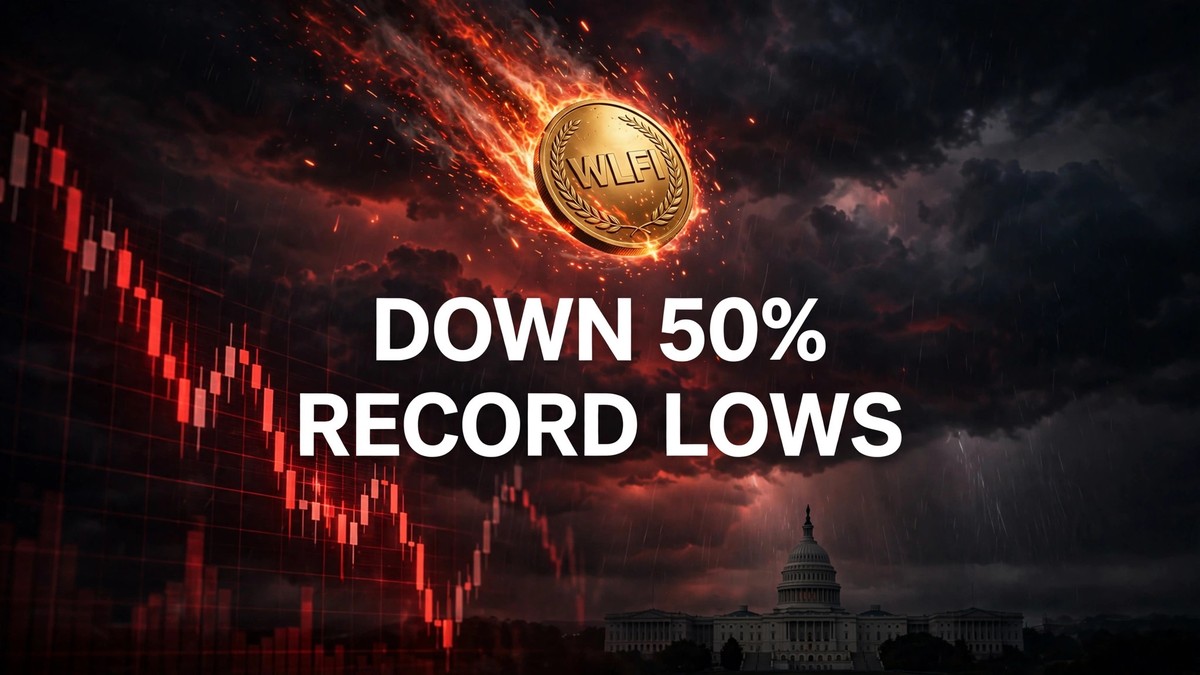
The token of the Trump family-backed crypto venture just had the worst day in its short life. World Liberty Financial’s WLFI token plunged more than 50% in 24 hours, hitting record lows near $0.016 before recovering slightly to around $0.017, according to CoinDesk data. The crash coincided with a large sale of Ethereum from a wallet linked to the project — and with the project’s own stablecoin briefly losing its dollar peg. It was, by any measure, a brutal day for one of the most politically connected tokens in crypto.
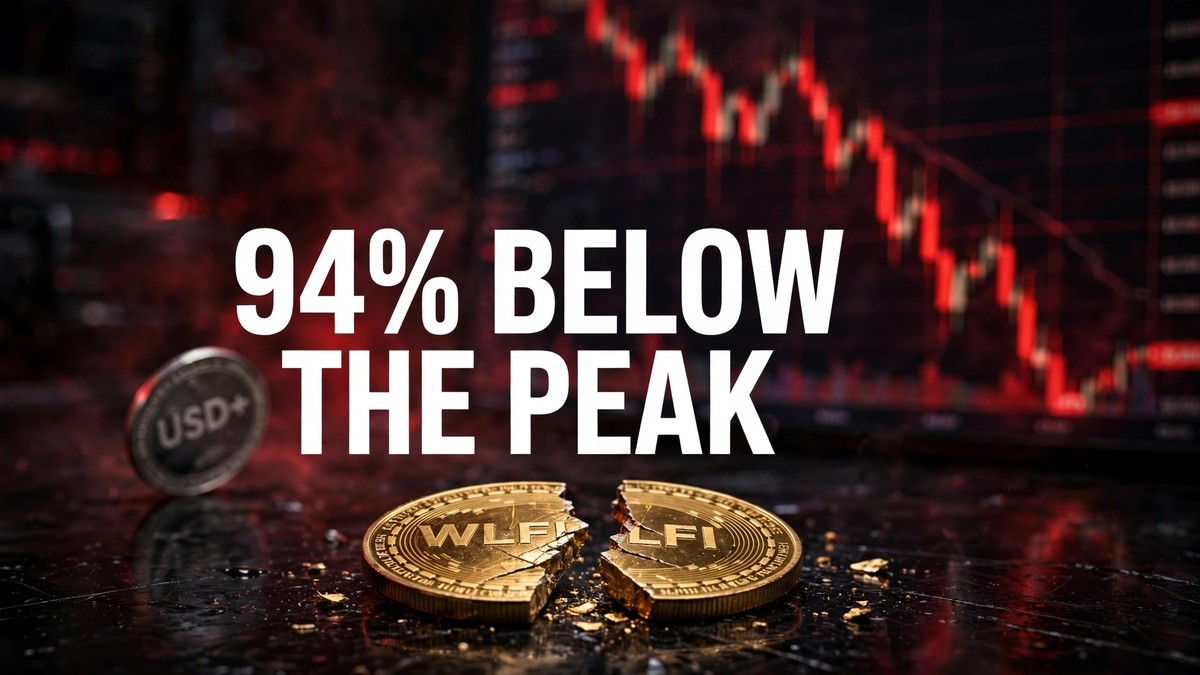
The numbers behind the fall are stark. WLFI fell about 52% over 24 hours, with an intraday low near $0.01579, and at its worst the token was trading roughly 94% below its peak of about $0.3313, set in September 2025. The market value of the token collapsed with it, falling toward $1 billion during the worst of the sell-off. For a project that launched with the full weight of the Trump family name behind it, the fall to record lows is a humbling one — and it happened in a single day.
💵 12,121 ETH sold — at about half what it cost
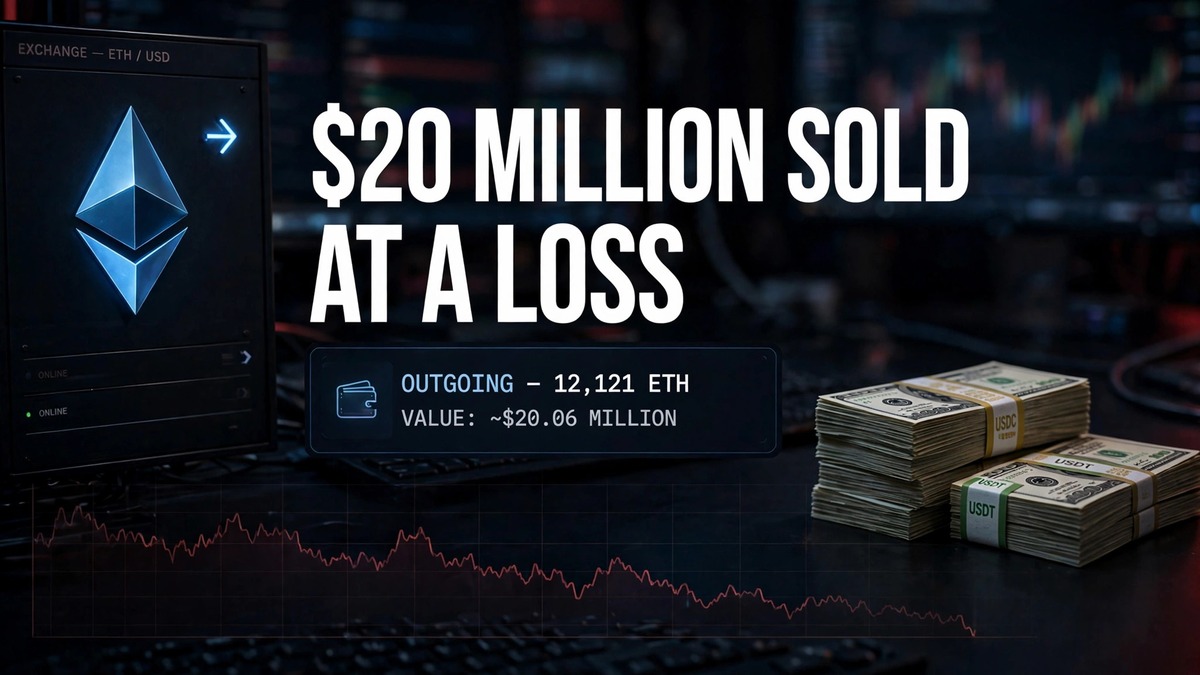
The sale at the centre of the story is precise, and it is documented on-chain. Early on Friday, blockchain tracker EmberCN, citing Arkham Intelligence data, reported that an address labelled “World Liberty Financial: Strategic Reserve” offloaded 12,121 ETH through decentralised exchange aggregator CoW Swap for roughly $20.06 million in stablecoins — $17.58 million in USDC and $2.48 million in USD1, the project’s own stablecoin. The sale was executed at an average price near $1,655 per ether.
That price is the painful part. The reserve had accumulated its ETH last year at an average price of roughly $3,244 — so the sale locked in an estimated $19.26 million realised loss, close to half the original cost. Selling an asset at about half what you paid for it is never a good look. Selling it from a wallet labelled as your strategic reserve, on the same day your token crashes to record lows, is considerably worse.
It is important to be careful about what the on-chain data does and does not prove. The wallet is labelled as World Liberty’s strategic reserve by Arkham’s entity tracking, and the transaction itself is visible and verifiable. What is not established is why the sale happened, or whether it caused the WLFI crash — the token’s decline occurred during the same period, but the available transaction records do not establish a direct causal link. The sale and the crash coincided. Coincidence is not causation, and the project has not publicly explained the sale.
📈 The stablecoin wobbled too — and the feud reignited
The ETH sale was not the only problem on Friday. World Liberty’s own dollar stablecoin, USD1, briefly lost its $1 peg late in the day, falling nearly 6% to about $0.94 against USDT on Binance. A stablecoin that does not hold its peg is a serious matter for any project, and for one whose token was already crashing, the timing could hardly have been worse. USD1 later recovered to near $0.998, but the wobble was real — and it drew attention to the project’s finances at exactly the wrong moment.
There was also movement elsewhere in the ecosystem. On-chain tracker Lookonchain reported that Jump Crypto withdrew 43.26 million USD1 from exchanges within an hour, buying the stablecoin at a discount and redeeming it for $1 through BitGo — the kind of arbitrage that only exists when a peg has slipped. And the crash reignited a bitter public feud with one of the project’s earliest billionaire backers: Tron founder Justin Sun, who has been publicly critical of the project, with chatter on X linking the ETH sale to a $75 million stablecoin loan World Liberty Financial took against roughly 5 billion of its own WLFI tokens on Dolomite earlier this year.
That loan link is market speculation, not confirmed fact — nobody has shown that the team sold ether to repay debt or add collateral and lower the loan’s liquidation threshold. But the speculation itself is part of the story now, because it is what traders are talking about, and in a panic, what traders believe matters almost as much as what is true. World Liberty Financial, for its part, pointed at Binance in an X post, saying the exchange had automatically closed WLFI perpetual futures positions on both the long and short sides overnight. The statement gave no count of affected accounts or size of losses, and it did not address the reserve wallet’s ether sale, the USD1 depeg or Sun’s accusations.
It is also worth noting the irony sitting underneath the whole episode. World Liberty Financial announced a WLFI buyback programme on November 5, funded partly through ecosystem revenue — a programme designed to support the token’s price. Three weeks later, a wallet linked to the project was selling its Ethereum at a steep loss on the same day the token hit record lows. The buybacks and the sale are not necessarily connected. But the contrast is not a good look.
⚠️ What the crash actually tells us
Strip away the politics and the personalities, and the WLFI crash is a story about leverage, liquidity and trust — the same three things that have defined this whole brutal November. A token down 94% from its peak does not need a single cause to fall another 50% in a day. It needs thin liquidity, a nervous market, and a trigger — and on Friday it got all three at once: a reserve-wallet sale at a large loss, a stablecoin depeg, a public feud, and a market already in Extreme Fear with the Fear & Greed Index at 10.
The longer view is the sobering one. WLFI’s decline did not start on Friday. The token had already spent much of 2025 and 2026 trending down, and this drop added to those losses. The partial rebound to around $0.019-$0.020 after the initial crash suggests some buyers stepped in at the lows — but a bounce after a 50%-plus drop is not a recovery. It is a pause. And with the token still sitting near record lows, the market has not yet decided whether Friday was capitulation or just another leg down.
There is one more number that captures the scale of the day: long liquidations in WLFI exceeded $10 million in a single hour across major exchanges during the sell-off, with Binance reporting significant single-position wipeouts. The leveraged traders who bet on WLFI going up were cleaned out in the same hours the token was crashing — the same pattern, in miniature, as the $407 million liquidation flush across the wider market.
🎯 What to watch next
Watch the record low near $0.016 first. WLFI recovered slightly above it, but another move toward that zone would invite further selling if buyers fail to step in — and a break below it would set a fresh all-time low.
Watch USD1 second. The stablecoin is back near its peg, but a second depeg would be far more damaging than the first, because it would say the problem is structural rather than a one-off wobble. A stablecoin that cannot hold $1 is a project with a credibility problem.
And watch for an explanation. World Liberty Financial has not publicly addressed the reserve wallet’s ether sale, and until it does, the speculation — the loan, the debt, the collateral — will fill the silence. In a market this fearful, silence is not neutral. It is fuel.
WLFI crashed 50% to record lows. A linked wallet sold $20 million of ETH at a loss. The project blamed Binance. The market is still waiting for the real answer.
#CryptoBulletin #WLFI #Trump #CryptoNews #CryptoMarket #CryptoNewsToday #CryptoMarketToday #TopCryptoStory #Altcoins #Ethereum #Stablecoin #USD1 #CryptoTrading #DeFi #WorldLiberty