 Ethereum Just Picked the One Hash to Rule Them All — Keccak-256 Is Its Quantum Shield
 Stablecoin Holders Just Cashed Out $12 Billion in a Month — the 2022 Echo Nobody Wanted
 Ethereum Price Today, Nov 26: ETH Claws Back Toward $1,700 After the PCE Rout
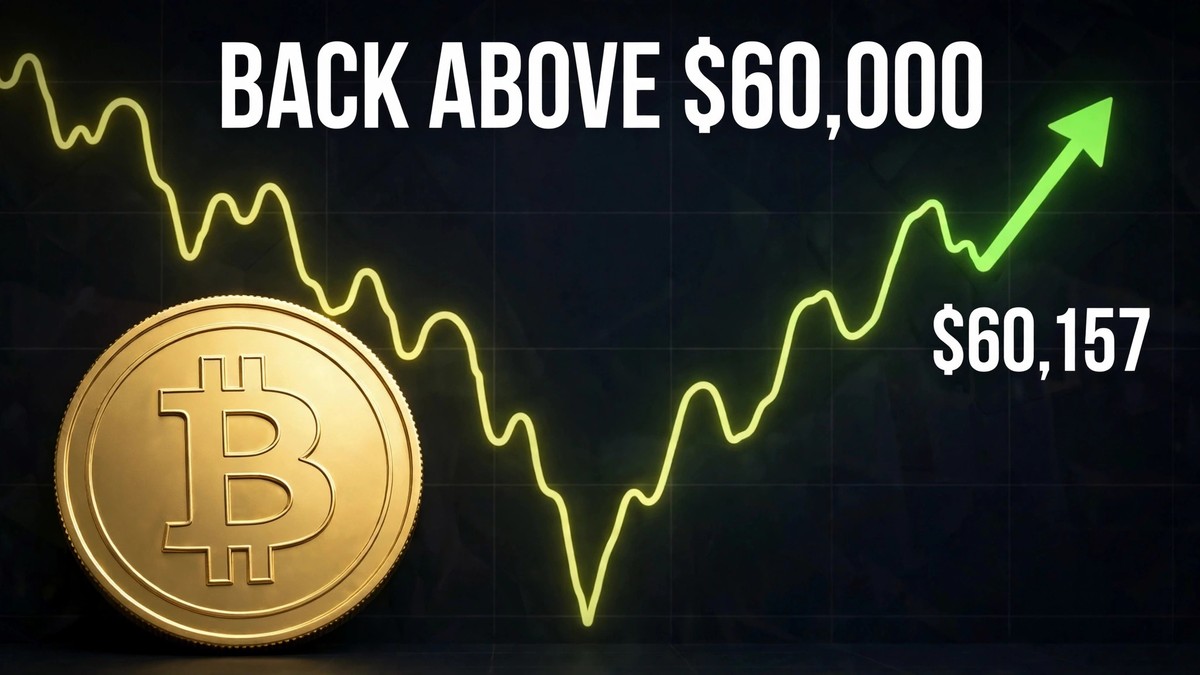 Bitcoin Price Today, Nov 26: BTC Reclaims $60,000 After the $57,300 PCE Scare
 Japan’s $2.3 Trillion Banking Giants Just Went All-In on Solana — SBI Solana Global Is Live
 Binance Is Pausing All Withdrawals Today — One Hour of Maintenance, and Traders Are Watching
 The FBI Just Dismantled 29 Scam Compounds and Froze $1 Billion in Stolen Crypto — Inside Operation Blackout
 Ansem’s Wallet Drained of $2.57M as His Own Token Crashes 60% — Hack or Inside Job?

November was supposed to be crypto’s month. Instead, it has become the month that erased the summer. Bitcoin is down 22% in November, down more than 30% so far this year, and the wider crypto market has lost over $500 billion in value since November 1.
This is not a dip. It is a rout — the worst month of a brutal year, and the numbers behind it are staggering. Bitcoin has lost roughly $31,000 in about six weeks. The total crypto market has shed $2.3 trillion since its October 2025 peak. And the fear gauge has been stuck in Extreme Fear while all of it happened.
💵 How November broke Bitcoin
The month started quietly enough, but the selling never really stopped. Bitcoin slid through October’s highs, then through $70,000, then through $60,000 on Friday, November 20, before crashing to $55,130 on Saturday morning — its lowest price since September 2024. The weekend bounce back above $60,000 recovered some of the damage, but it did not change the monthly picture: Bitcoin is still down 22% in November and 25% over the last 30 days.
The rest of the market fell harder. Ethereum is down about 28.5% over the last month, Solana is down more than 31%, and XRP has lost nearly 29%. There was nowhere to hide. Even the coins that held up best in October gave it all back in November.

📈 The money walked out first
The selling was not only on the charts — it was in the flows. US spot Bitcoin ETFs have seen more than $3.47 billion in outflows in November, including $1.47 billion in the week of November 16–20 alone. On November 19, a single day saw $582.3 million leave Bitcoin funds, with $541.1 million of that coming out of BlackRock’s IBIT. When the biggest buyers in the market become sellers, the price follows.
Leverage made it worse. When Bitcoin broke $60,000, forced selling cascaded through the market — $2.56 billion in leveraged positions were liquidated in a single day, the 11th-largest liquidation event in crypto history. Short-term holders moved 92,100 BTC, worth about $5.34 billion, onto exchanges at a loss on November 21, and Bitcoin open interest fell by $2.54 billion across the major futures venues in 30 days. The market was not just falling. It was deleveraging — violently.
⚠️ What the rout really means
Routs like this one do two things at once. They destroy confidence, and they clean the market out. The leverage that built up during the year’s rally is now mostly gone, flushed out in a single weekend. That is painful, and it is also usually what has to happen before a market can turn.
But nothing about November says the turn has come yet. Bitcoin is still down more than 30% this year, the Fear & Greed Index is sitting at 11, and every bounce so far has run into sellers at $61,000. The ETF outflows have not reversed. The fear has not lifted. A rout ends when buyers come back with conviction, not when the price bounces for a day.

🎯 What to watch next
Watch the ETF flows. November’s story is the story of money leaving, and the rout does not end until the flows turn — a week of net inflows would matter more than any single green day. Watch $60,000 too: if Bitcoin holds it through the end of the month, November ends as a bad month instead of a catastrophic one. Lose it, and the next stop is the $55,000 low.
November took $500 billion off the market in three weeks. The question now is whether December gives any of it back — or takes more.
#CryptoBulletin #Bitcoin #BTC #BTCPrice #CryptoCrash #NovemberRout #CryptoNews #CryptoMarket #CryptoNewsToday #CryptoMarketToday #BitcoinCrash #CryptoBearMarket #Altcoins #Blockchain #Web3 #CryptoTrading