 Lil Pudgys Floor Holds Near 0.22 ETH as the Little Penguins Weather a Red Day
 Jensen Huang Is Back at Nvidia — and the Memecoin Market Lost Its Mind Overnight
 Kraken’s kBTC Vault Pulled In $30 Million on Day One — Bitcoin Yield Is Having a Moment
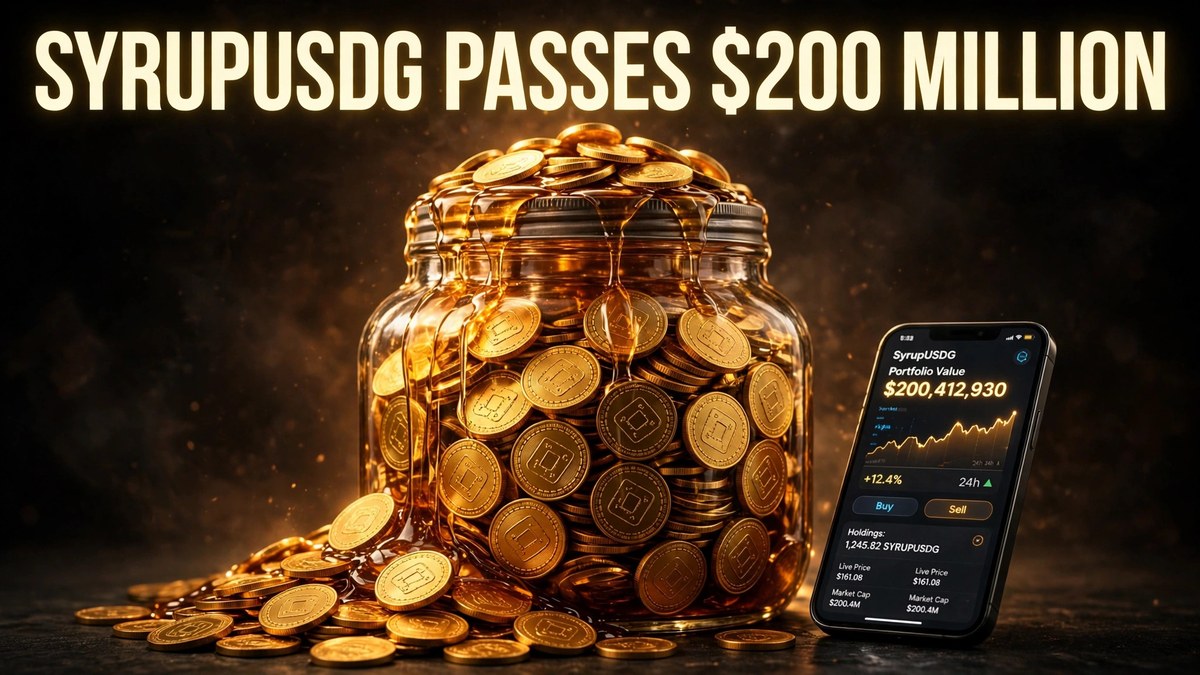 Maple’s syrupUSDG Just Passed $200 Million — Its First New Syrup Asset in Two Years
 Ondo Just Tokenized Silver and Gold — SLVon and IAUon Bring Wall Street Metals Onchain
 Your Next House Deed Might Be an NFT — Real Estate Tokens Are Quietly Moving
 Pupkins: The NFT Game Where Your Pet Holds Real Stocks — and Everyone Is Talking About It

Eleven percent a year on a stablecoin. In a market where Treasury-backed dollars pay around 4–5%, that number stops you mid-scroll — and it is supposed to. Saturn’s sUSDat vault targets 11%+ APY, and the yield comes from one of the most talked-about credit instruments in crypto: Strategy’s STRC.
The setup is a two-token system, and understanding it is the whole game. USDat is the plain dollar — a non-yielding stablecoin, pegged 1:1 to USDC and backed by tokenized US Treasuries via $M. sUSDat is the staked version: an ERC-4626 vault that accrues yield as STRC dividends accumulate. You hold the vault token, the vault holds the credit, and the dividends flow through to you. Simple on paper. The catch is in the details.
💵 Where the 11% actually comes from
STRC is Strategy’s preferred stock — a Bitcoin-backed credit instrument from the company formerly known as MicroStrategy, the largest corporate holder of Bitcoin. It pays a dividend that has run around 11.5–12% a year, switching to daily dividend payouts from November 1, 2026, with the first distributions landing on November 3. Saturn takes that yield, wraps it in a vault, and offers it onchain as sUSDat.
The 11%+ figure is Saturn’s target, reported by protocol listings — not a guaranteed rate, and not Saturn’s own audited return. It depends on STRC continuing to pay its dividend at current levels, and on Strategy continuing to hold the Bitcoin that backs it. If either changes, the yield changes with it. Treat the number as a target with a source, not a promise.
📈 The vault, the queue, and the fine print
sUSDat is an ERC-4626 vault, the standard design for yield-bearing tokenized vaults, which means it plugs into DeFi — Pendle Finance integration, for example, lets users split the principal from the yield. Saturn itself launched in March 2026, raised $800,000 in early 2026, and was listed at over $60 million in TVL by May 2026. It has kept growing since — DefiLlama now puts Saturn’s TVL at about $132 million.
Then there is the catch in the headline: withdrawals sit in a 3–7 day queue. Your money is not locked, exactly — but it is not instant either. In a fast market, a week is a long time to wait for your dollars, and in a fearful market — Fear & Greed sits at 11, deep in Extreme Fear — a queue is exactly the kind of detail that matters when everyone wants out at once.
⚠️ What could go wrong
The risks stack up in layers, and each one is real. STRC’s dividend depends on Strategy’s financial health and its Bitcoin treasury — if Bitcoin falls hard, the credit behind STRC weakens. STRC itself trades as a preferred stock, so its price can move, and the vault’s value moves with the assets it holds. And the 3–7 day queue means that in a stress event, you cannot exit at the speed of a normal stablecoin swap.
None of that makes sUSDat a bad product. It makes it a credit product, not a savings account — and credit products pay more precisely because they carry more risk. The 11% is the market’s price for holding Strategy’s credit risk, wrapped in a vault, with a queue at the door.

🎯 What to watch next
Watch STRC’s dividend first — it is the engine of the whole vault, and any cut flows straight through to sUSDat holders. Watch the queue second: if withdrawal times stretch past seven days, that tells you more about demand than any APY figure. And watch Saturn’s TVL with fresh data, because a vault growing in Extreme Fear is saying something loud about where yield hunters are parking their dollars.
Eleven percent is real, and so is the catch. In this market, both halves of that sentence matter equally.
#CryptoBulletin #DeFi #Stablecoins #Saturn #sUSDat #USDat #STRC #Strategy #CryptoNews #CryptoNewsToday #CryptoMarketToday #TopCryptoStory #Blockchain #CryptoYield #RWA #Web3