 Lil Pudgys Floor Holds Near 0.22 ETH as the Little Penguins Weather a Red Day
 Jensen Huang Is Back at Nvidia — and the Memecoin Market Lost Its Mind Overnight
 Saturn’s sUSDat Pays 11%+ — The Stablecoin Vault With a 3–7 Day Catch
 Maple’s syrupUSDG Just Passed $200 Million — Its First New Syrup Asset in Two Years
 Ondo Just Tokenized Silver and Gold — SLVon and IAUon Bring Wall Street Metals Onchain
 Your Next House Deed Might Be an NFT — Real Estate Tokens Are Quietly Moving
 Pupkins: The NFT Game Where Your Pet Holds Real Stocks — and Everyone Is Talking About It

Bitcoin holders have spent years hearing the same complaint: your BTC just sits there. It does not earn yield, it does not pay interest, and every dollar of return comes from the price going up. Kraken decided to fix that — and the market answered fast.
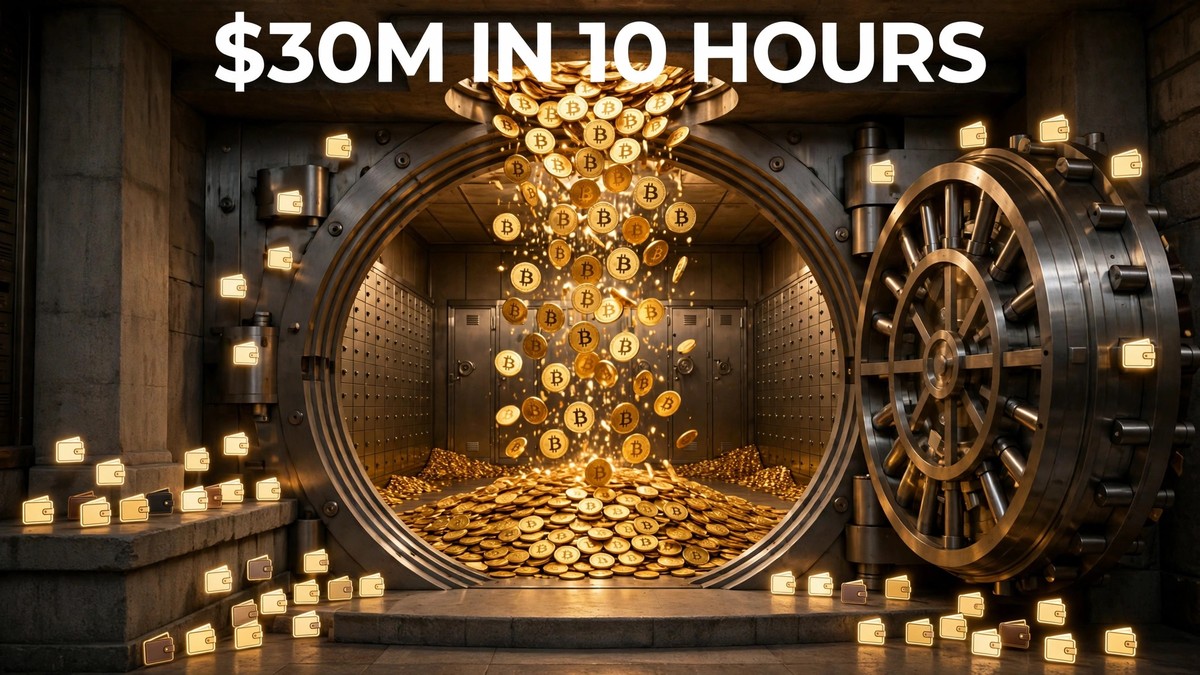
When Kraken launched its Bitcoin Vault in May 2026, deposits topped $30 million from 4,000 separate wallets in the first 10 hours, according to Veda, the yield infrastructure provider behind the product. Thirty million dollars, four thousand wallets, ten hours — for a product that asks Bitcoin holders to do the one thing they hate most: move their coins.
💵 How the vault works
The idea is simple, even if the plumbing is not. Users deposit Bitcoin into the vault, and it is converted into Kraken Wrapped Bitcoin — kBTC — a token that tracks Bitcoin’s value one-to-one and is fully backed by Bitcoin held in Kraken’s segregated reserves. That wrapped Bitcoin is then deployed by Sentora across DeFi lending markets, including Aave, Morpho and Tydro, and the lending yield flows back to depositors.
The target is 2.5% a year. That will not make anyone rich, and Kraken does not pretend otherwise — the pitch is a modest, steady return on an asset that otherwise pays nothing. The product is non-custodial, meaning only depositors can access their funds, and it sits inside Kraken’s Earn lineup alongside the exchange’s stablecoin yield products, which had already pulled in more than $245 million in deposits.
📈 Bitcoin yield is suddenly everywhere
Kraken’s vault did not arrive in a vacuum. It landed in the middle of a genuine shift: Bitcoin, the asset famous for paying nothing, is becoming a yield-bearing asset. Wrapped Bitcoin now moves across Ink, Unichain, Ethereum and OP Mainnet — kBTC itself was built for exactly that, letting Bitcoin loose in DeFi ecosystems that were built for Ethereum tokens.
The demand makes sense. Bitcoin is sitting near $59,767, down 2.3% in a day, with the market in Extreme Fear. Holders who are not selling want their coins to do something while they wait — and 2.5% beats zero, especially when the alternative is watching a volatile asset sit idle in a wallet.
It is worth keeping the number in perspective, though. Thirty million dollars is a strong launch, but it is a rounding error next to the billions in Bitcoin ETFs and the trillions in Bitcoin’s market cap. The vault proved demand exists. It did not prove the demand is limitless.
⚠️ The fine print: five days out, 25% off the top
Two terms matter more than the headline rate. Withdrawals take an estimated five days to process — your Bitcoin is out working in DeFi, and unwinding that takes time. And service providers take a 25% performance fee on the rewards earned, so the 2.5% target is what you get after the fee structure does its work, not before it.
Those terms are the honest price of the product. The yield comes from real lending markets, which means real smart-contract risk, real counterparty exposure and real lock-up. A 2.5% return with a five-day exit is a fair trade for many holders — but it is a trade, not free money.

🎯 What to watch next
Watch whether the vault keeps growing past its launch-day $30 million — a product that stalls after day one was a curiosity, and one that compounds is a business. Watch the rate too: Kraken’s own page now lists the vault at 1.27% APY, down from the 2.5% launch target — if DeFi lending rates fall further, holding even that gets harder. And watch the competition, because every major exchange is now looking at Bitcoin yield, and Kraken will not be alone in this lane for long.
Bitcoin spent fifteen years paying nothing. The race to change that is now officially on — and $30 million in ten hours says the holders are ready.
#CryptoBulletin #DeFi #Bitcoin #BTC #Kraken #kBTC #BitcoinYield #CryptoNews #CryptoNewsToday #CryptoMarketToday #TopCryptoStory #BTCPrice #BitcoinVault #Blockchain #Web3 #CryptoYield