 NFTs in 2027: What Collectors Are Actually Watching
 NFT Royalties Are Fading: What Creators Actually Earn Now
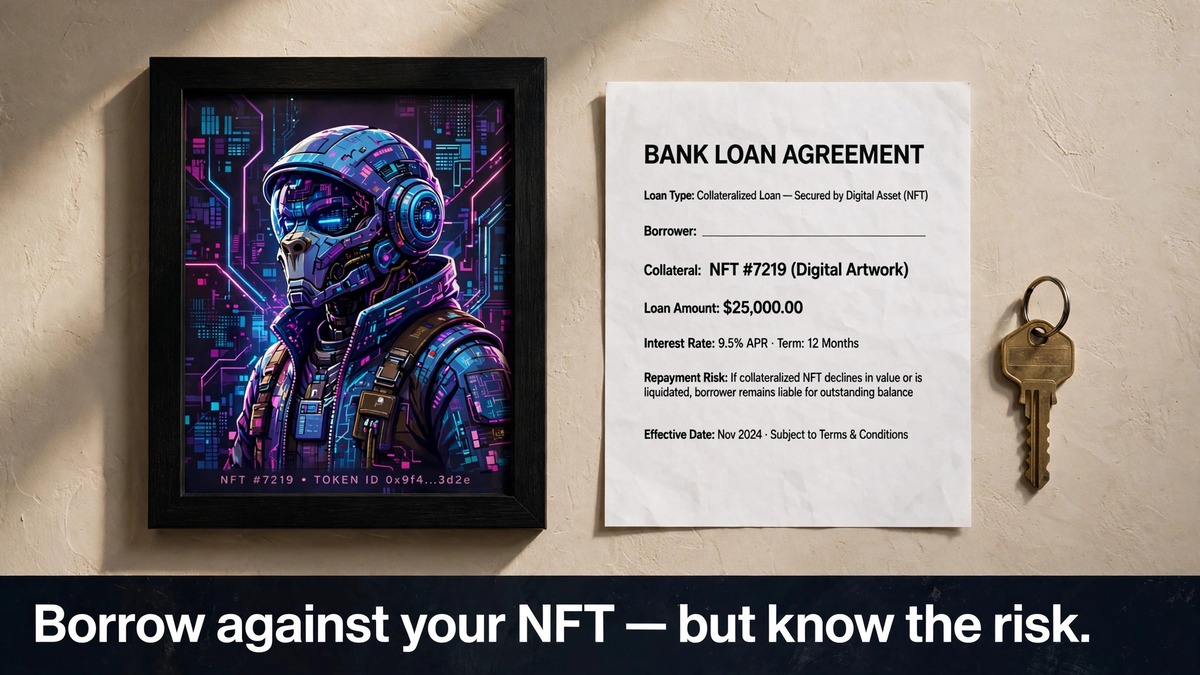 Borrowing Against Your NFT: How NFT Lending Works — and Where It Breaks
 How to Spot a Fake NFT Before You Buy It
 NFT Games After Somnium: What “Leaving Crypto” Actually Means for Players
 One Bitcoin NFT Sold for $1.58M: The BRC-20 Sale That Lifted the Whole Week
 PIEVERSE Jumps 50% in a Day as Its AI Agent Beta Opens
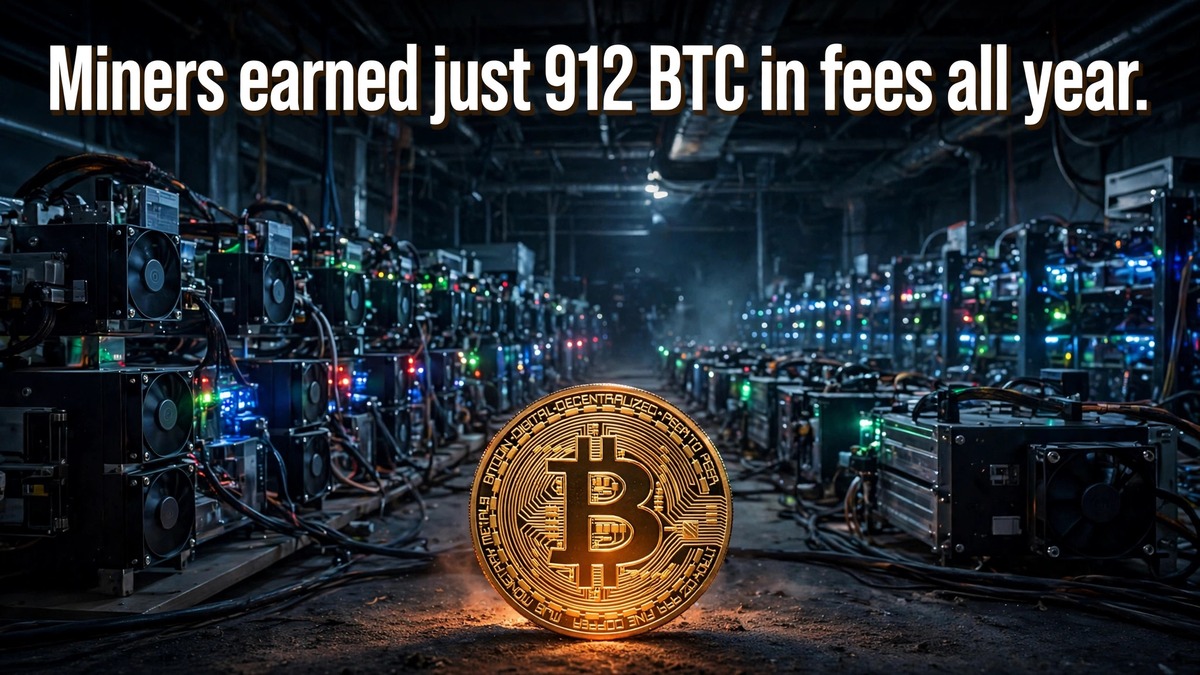
Miners earned just 912 BTC in fees all year.
Bitcoin miners earned just 912 BTC in transaction fees in 2026.
That is a 15-year low, the lowest since 2011, despite high daily transactions. Fees made up only 0.63% of miner revenue. The figure was reported in a 19 November roundup, and it is flagged here as a single-source figure — see the unverified list at the end of this file.
The number sounds small, and it is. But to understand why it matters, you need to know how miners get paid. Miners do two jobs. They secure the Bitcoin network by confirming transactions, and they are paid in two ways for that work: the block reward, which is new Bitcoin created with each block, and transaction fees, which users pay to get their transactions confirmed faster.
For most of Bitcoin’s life, the block reward has done the heavy lifting. Fees were a small extra. That was fine while the block reward was large. Every four years, though, the block reward is cut in half. That event is called the halving. The last halving cut the reward to 3.125 BTC per block. The next halving will cut it again. Over time, the plan is for fees to take over as the main payment for miners.
The 912 BTC figure suggests that takeover is not happening yet. If fees are only 0.63% of revenue, miners are still living almost entirely on the block reward. That is not a crisis today. The block reward still exists, and miners still earn it. It is a warning about the future. If fees stay this low, what happens when the reward gets smaller again?
There are a few reasons fees can fall even when transactions stay high. One is that users are not competing hard for block space. When the network is not congested, there is no need to pay a high fee to jump the queue. Transactions confirm quickly at a low cost. That is good for users. It is bad for miner fee income.
Another reason is how transactions are built. Newer wallet software batches payments, uses cheaper transaction types, and avoids waste. The Lightning Network, a second layer on top of Bitcoin, also takes many small payments off the main chain. Those payments still happen, but they do not pay main-chain fees in the same way. The network can be busy without the main chain being busy.
High daily transactions, reported alongside the fee figure, fit that picture. People are using Bitcoin. They are just not paying much to use the main chain. That could mean the system is working well for users. It could also mean miners are not getting the signal that their work is valued in fees.
For miners, the math is blunt. Mining costs real money: electricity, machines, cooling, rent, staff. Revenue has to cover those costs, or miners switch off machines. If fees are tiny, miners depend on the Bitcoin price and the block reward. When the price falls, that dependence hurts. Bitcoin was at $63,902 on 19 November, down 1.2% on the day and about 50% below its $126,080 high from October 2025. A lower price means each block reward is worth less in dollars, while electricity bills stay the same.
That pressure does not hit all miners equally. Large miners with cheap power and new machines can survive thin margins. Small miners with expensive power cannot. Over time, low fees could push mining toward fewer, larger firms. That raises a different question: does that make the network less decentralised? Bitcoin’s security depends on many independent miners. If only a few remain, the network is easier to influence.
Network security is the deeper issue. Miners secure Bitcoin by spending real resources to confirm blocks. If mining becomes unprofitable, some miners leave. Fewer miners can mean a less secure network, at least in theory. In practice, Bitcoin has survived fee lows before, and the difficulty adjustment lowers the cost of mining when miners leave. The network adapts. The question is how far that adaptation can go if fees stay low for years.
It is worth keeping the number in context. The figure covers fees earned in 2026 so far, as reported. It does not mean miners earned only 912 BTC in total. Their main income, the block reward, is far larger. The 0.63% share is the point. Fees are a tiny slice of the pie. The pie itself is still mostly block reward.
What should readers watch next? First, whether fees rise when the market gets busy again. A busy bull market usually brings higher fees, as users rush to trade. Second, whether new uses for Bitcoin block space appear, such as Ordinals and BRC-20 activity, which can push fees up. Third, whether miners start to change strategy, by holding more Bitcoin, cutting costs, or adding other income like AI computing.
For now, the headline stands. Miners earned just 912 BTC in fees in 2026, a 15-year low. Transactions stayed high, but fee income did not. That gap is the story, and it will matter more with each halving.
Disclaimer: This article is for information only and is not financial advice. The 912 BTC fee figure is reported from a single source, as noted in this file.
#CryptoBulletin #Bitcoin #BTCPrice #Blockchain #CryptoNewsToday #CryptoMarketToday #Web3 #CryptoNews #DeFi #Altcoins #Crypto #BitcoinPrice #MarketUpdate #CryptoCommunity #Investing #Finance