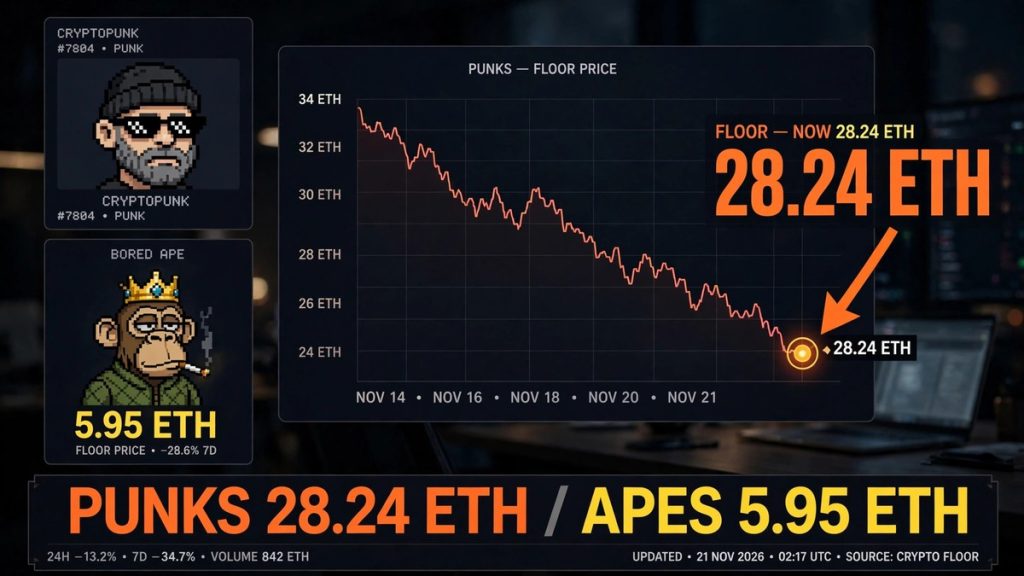
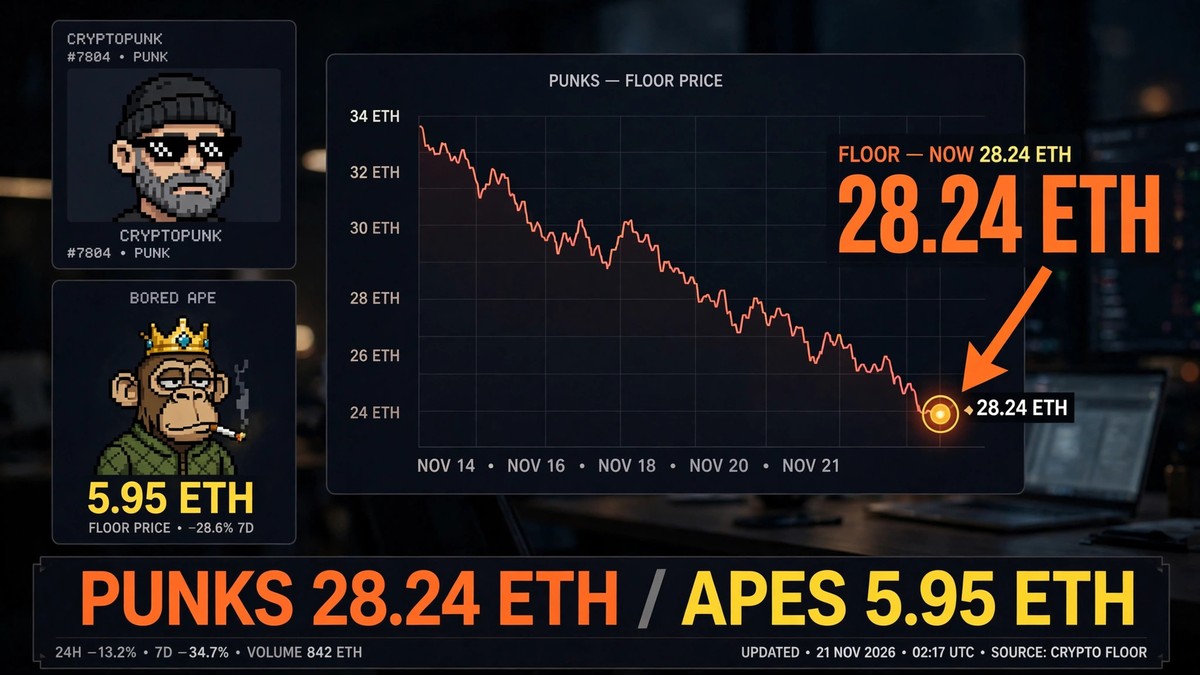
 CryptoPunks Floor Slips to 28.24 ETH as Bored Apes Fall to 5.95 ETH
 Blue-Chip NFTs Rise While Crypto Falls — Lil Pudgys and Azuki Lead as Azuki Cards Hit Stores
 MoneyGram Lets Solflare Users Cash Out Solana USDC in 170+ Markets
 Solana Falls Below $70 After Mainnet 1.0 as Roundhill Drops Its Solana ETF Plan
 Ripple’s RLUSD Hits Record $2.7B as Binance Offers 600,000 XRP Airdrop to Holders
 Russia Opens Bitcoin, Ethereum and USDT Trading to Retail Investors Under New Rules
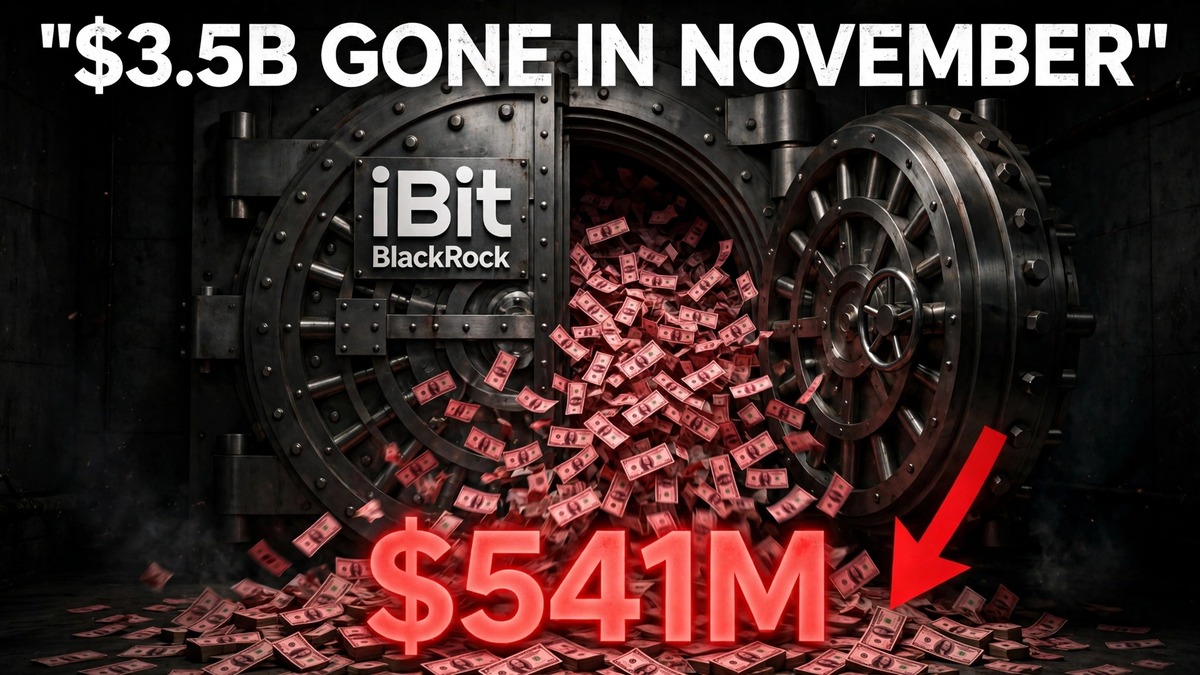 Bitcoin ETFs Lose Over $3.5B in November as BlackRock’s Record $541M Exit Leaves Q3 Buyers 19% Underwater
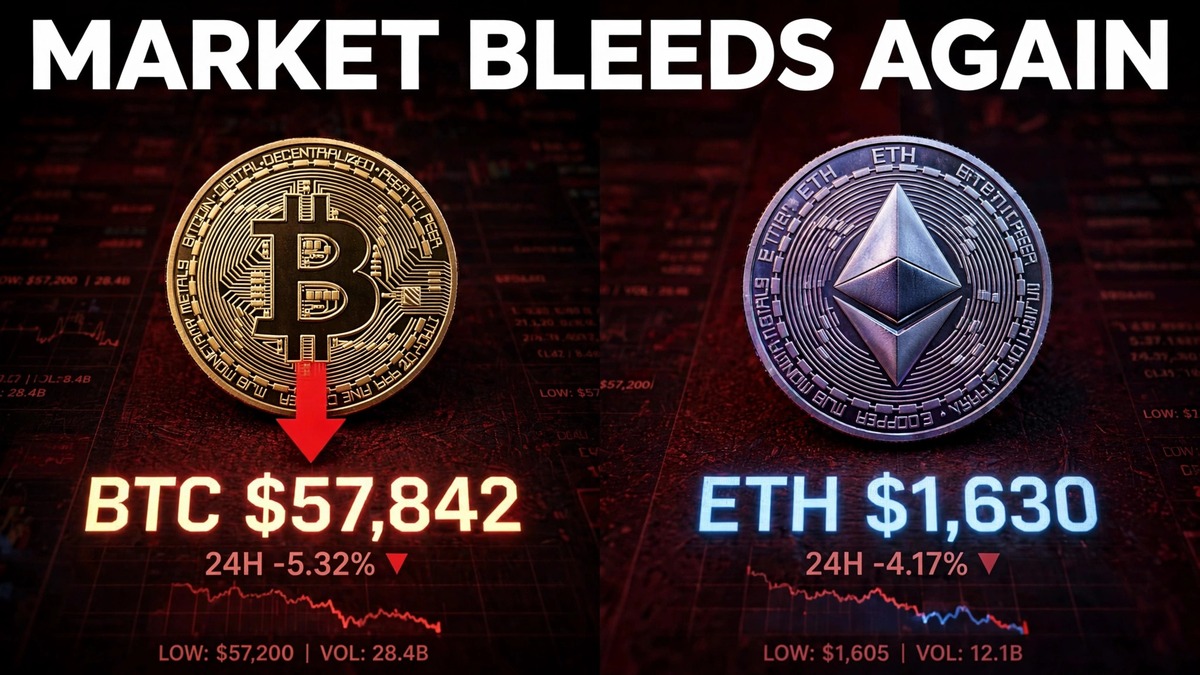 Crypto Market Today, Nov 22: Bitcoin Below $56,000, Ethereum Near $1,630 as Fear Stays Extreme

Here is a strange fact about Ethereum in 2026: public companies have never owned more of it, and the price has never looked worse. Companies listed on stock markets now hold a record 6.4% of all ETH in existence — roughly 7.86 million ETH — and the biggest buyer of all, Tom Lee’s Bitmine, is still hoarding. Yet ETH is trading around $1,751, down 41% this year.
That contradiction is the story. Someone is buying a lot of Ethereum. The market, so far, does not care.
The corporate hoard hits a record
The headline number is striking: 6.4% of ETH’s entire market cap now sits in the treasuries of public companies. That is not a handful of crypto-native firms dabbling at the edges. It is a structural shift in who owns Ethereum — from individuals and funds to listed companies that hold it as a balance-sheet asset, the way an earlier generation of firms held gold or government bonds.
Roughly 7.86 million ETH is a lot of coins to take out of circulation. Every coin held in a corporate treasury is a coin that is not being traded day to day, not being sold into rallies, not adding to supply on exchanges. In theory, that should support the price. In practice, this year, it has not — at least not yet.
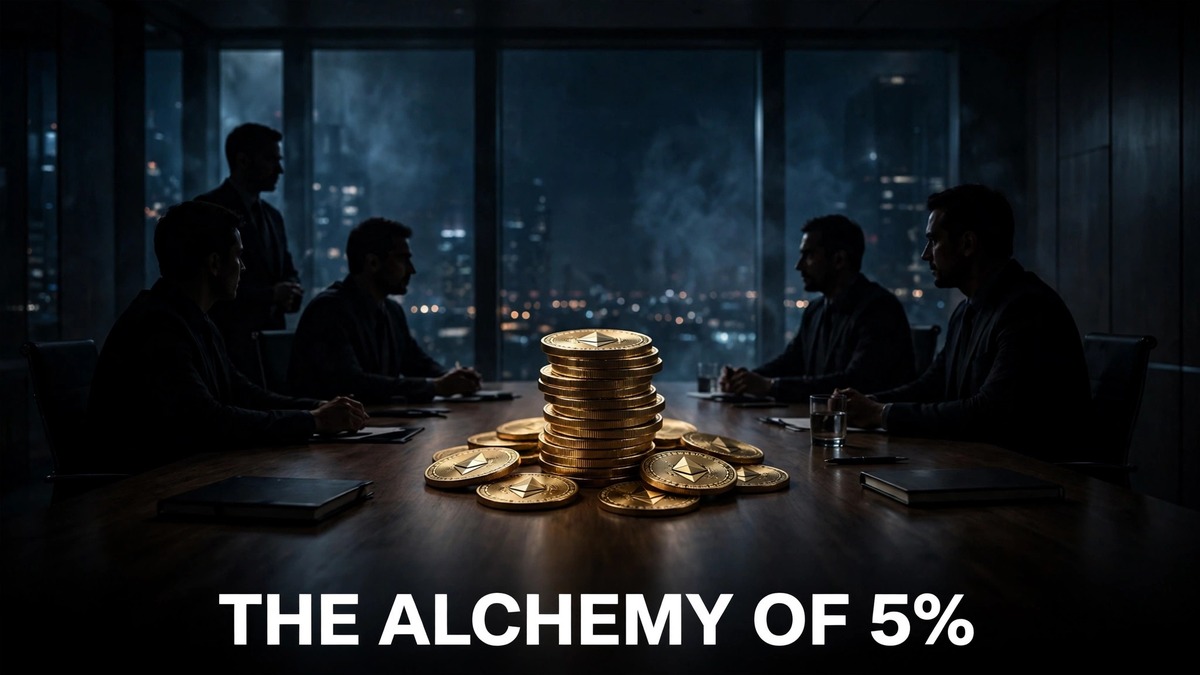
Tom Lee and “the alchemy of 5%”
At the centre of the buying is Bitmine, chaired by Tom Lee, the well-known market strategist. Lee has set an audacious goal: for Bitmine to hold 5% of Ethereum’s entire circulating supply. He calls it “the alchemy of 5%” — the idea that owning a meaningful slice of a network’s supply creates a kind of compounding value that goes beyond the coins themselves, through staking rewards, network influence and the sheer scarcity of what remains for everyone else.
It is a bold claim, and Lee knows it. Five percent of a network as large as Ethereum is an enormous position, and building it takes time, money and conviction. Bitmine has been buying steadily toward that goal, even as the price has fallen. That is either remarkable discipline or remarkable stubbornness, depending on your point of view.
The ATM goes quiet
There is a telling detail in how Bitmine has been funding its purchases. The company had been raising money through an equity ATM — a mechanism that lets it sell new shares into the market to raise cash — but that programme has been off since Sep 29, when Bitmine’s mNAV dipped below 1.
mNAV, or market net asset value, is a ratio that compares a company’s share price to the value of the crypto it holds. When it dips below 1, the market is valuing the company at less than its crypto holdings are worth, and issuing new shares to buy more crypto stops making sense — you would be selling shares cheap to buy an asset the market already thinks you own too much of. Turning the ATM off was the disciplined move. It also means Bitmine’s buying power is more constrained than it was, at least until the ratio recovers.
Down 41% despite the buying
The uncomfortable truth is that none of this buying has saved the price. ETH is down 41% this year, a brutal drawdown for a coin that many expected to benefit from corporate adoption, ETF flows and network upgrades. The corporate buyers are accumulating into weakness, and so far the weakness keeps winning.
There are a few ways to read that. One is that corporate buying is simply not big enough, yet, to offset the wider selling — from funds, from traders, from a market gripped by fear and by the same forces dragging down Bitcoin and stocks. Another is that the market does not yet believe the corporate-treasury story for Ethereum the way it came to believe it for Bitcoin. And a third is that the buying is real but slow, and its effect will only show up over months and years, not days.

Why it still matters
It would be easy to dismiss the corporate hoard as irrelevant while the price falls. That would be a mistake. Ownership shifts like this do not reverse quickly. Companies that buy ETH for their treasury tend to hold it. They stake it, they report it, they build strategies around it. They do not day-trade it.
If the market turns — if Bitcoin finds a floor, if fear eases, if institutional flows return — the fact that 6.4% of supply is sitting in corporate treasuries, much of it staked and illiquid, could matter a great deal. Scarcity does not create a rally on its own, but it can amplify one when it comes.
Tom Lee is betting that the alchemy works. The market, down 41%, is betting it does not — or at least, not yet. One of them will be right. The next few months will start to tell us which.
Hashtags: #CryptoBulletin #Ethereum #ETH #ETHPrice #Bitmine #TomLee #Altcoins #CryptoNewsToday #LatestCryptoNews #CryptoMarket #DeFi #CryptoUpdate #Bitcoin #EthereumNews #CryptoTrading #InstitutionalCrypto #CryptoTreasury #Web3