 Japan’s $2.3 Trillion Banking Giants Just Went All-In on Solana — SBI Solana Global Is Live
 Binance Is Pausing All Withdrawals Today — One Hour of Maintenance, and Traders Are Watching
 Ansem’s Wallet Drained of $2.57M as His Own Token Crashes 60% — Hack or Inside Job?
 Lil Pudgys Floor Holds Near 0.22 ETH as the Little Penguins Weather a Red Day
 Jensen Huang Is Back at Nvidia — and the Memecoin Market Lost Its Mind Overnight
 Saturn’s sUSDat Pays 11%+ — The Stablecoin Vault With a 3–7 Day Catch
 Kraken’s kBTC Vault Pulled In $30 Million on Day One — Bitcoin Yield Is Having a Moment
 Maple’s syrupUSDG Just Passed $200 Million — Its First New Syrup Asset in Two Years

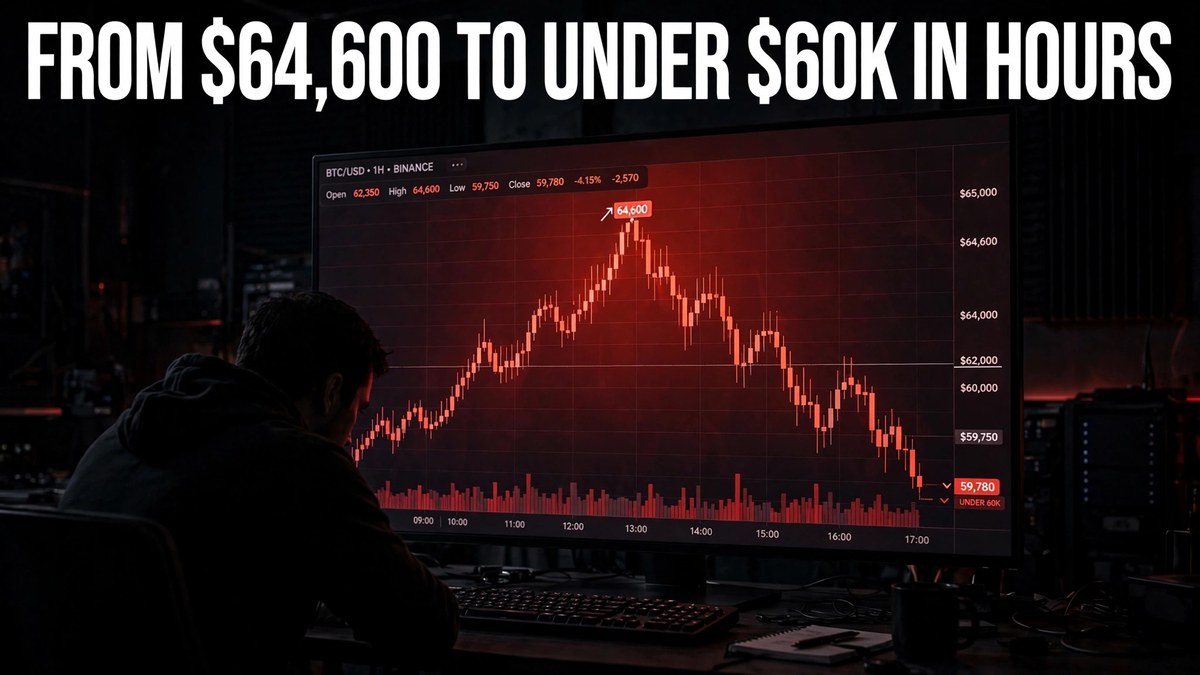
Bitcoin fell back below $60,000 late on Monday, wiping out almost the entire rebound it had built just hours earlier. The world’s biggest cryptocurrency touched $59,986 on OKX and dipped under the line on Coinbase and Bitstamp too, and by Tuesday morning it was still hovering just above the level, trading near $60,500 — a far cry from the $64,600 peak it hit during Monday’s Nvidia-fuelled surge.
The rebound lasted barely a day. On Monday, Nvidia jumped more than 30% after Jensen Huang was reinstated as chief executive, and Bitcoin rode the wave, climbing from the weekend’s two-year low near $55,100 all the way to $64,603. Traders called it a comeback. Then the sellers arrived, the stock market’s excitement faded, and Bitcoin gave almost all of it back in a matter of hours.
💵 The Numbers Right Now
Bitcoin was trading near $60,500 on Tuesday morning, down roughly 1% in 24 hours and down about 26% over the past month. Ethereum fell with it, slipping under $1,700 at one point before steadying near $1,702. Solana was the rare green name among the majors, up slightly near $71.85, while BNB held around $554.
The scale of the round trip is what stings. Monday’s evening low on Coinbase sat about 8% below the day’s peak and roughly 30% below Bitcoin’s October high near $126,000 — yet it still held above the weekend trough. In other words, the market bounced hard, then decided the bounce was not worth keeping.
📉 Why the Rebound Died So Fast
The honest answer is that Monday’s rally was never really about Bitcoin. It was about Nvidia. When the chip giant surged, risk appetite came flooding back and Bitcoin caught the draft — helped by a short squeeze that wiped out about $500 million in crypto positions, mostly shorts, as prices ripped higher. But a squeeze is borrowed strength: once the shorts were gone, there was nobody left to keep buying.
Underneath, the same pressures that dragged Bitcoin to $55,100 over the weekend never went away. US spot Bitcoin ETFs have now posted four straight weeks of outflows, and November is shaping up to be one of the worst months on record for the funds. The Crypto Fear & Greed Index is stuck at 11 — deep in Extreme Fear — and it has been there for days. When fear runs that hot, every rally gets sold.
📉 The ETF Bleed Is Getting Worse
This is the part of the story that should worry holders most. US spot Bitcoin ETFs shed about $1.8 billion last week, the third-largest weekly outflow ever, according to Cointelegraph. November outflows now stand at roughly $4.14 billion — the second-biggest monthly outflow of the year.
BlackRock’s IBIT, the largest fund, is carrying most of the damage. It lost a record $541.1 million in a single day on November 19 and accounts for about 85% of November’s outflows so far. The funds that were Bitcoin’s biggest buyers through most of 2025 have turned into its biggest sellers, and there is no sign yet of a new buyer stepping in to replace them.
Strategy, the largest corporate holder, is feeling it too. The company bought another 457 BTC even as prices slid, but at $60,000 its 850,849-coin pile is worth roughly $13 billion less than it paid for it — and index provider MSCI is set to remove the stock from its indexes on November 30, which could force more selling.

🎯 What to Watch Now
The first line that matters is the weekend low near $55,100. If Bitcoin breaks that, analysts see $53,000 as the next stop — and below that, the psychological $50,000 mark comes into play. On the upside, the zone between $62,000 and $65,000 is now resistance: Bitcoin would need to reclaim it and hold it before anyone can call this a real recovery.
The calendar is not helping either. The US PCE inflation report lands on Wednesday, November 25, and it is the next big test for every risk asset. Then comes the Federal Reserve’s December 8–9 meeting, where traders are still pricing in the chance of another rate hike after hawkish meeting minutes. Until one of those events gives buyers a reason to step back in, every bounce is likely to be treated as a selling opportunity.
None of this means Bitcoin is finished — it has come back from worse, and it did exactly that over the weekend. But the pattern of the past few weeks is hard to ignore: lower highs, lower lows, and rallies that fade within hours. The $60,000 line was supposed to be the floor. Bitcoin has now lost it twice in four days.
🔑 The Takeaway
Bitcoin’s Nvidia-fuelled run to $64,600 is gone, and the coin is back below $60,000 with its biggest buyers — the ETFs — still heading for the exit. Until the $62,000–$65,000 zone is reclaimed or the PCE report changes the mood, traders should expect more of the same: sharp bounces, fast fades, and a market that punishes anyone who chases the green candles.
#CryptoBulletin #Bitcoin #BTC #BTCPrice #BitcoinCrash #CryptoNews #CryptoNewsToday #CryptoMarket #CryptoMarketToday #Ethereum #ETH #Nvidia #BitcoinETF #CryptoCrash #FearAndGreed #CryptoUpdate #Web3 #Blockchain