 Lil Pudgys Floor Holds Near 0.22 ETH as the Little Penguins Weather a Red Day
 Jensen Huang Is Back at Nvidia — and the Memecoin Market Lost Its Mind Overnight
 Saturn’s sUSDat Pays 11%+ — The Stablecoin Vault With a 3–7 Day Catch
 Kraken’s kBTC Vault Pulled In $30 Million on Day One — Bitcoin Yield Is Having a Moment
 Maple’s syrupUSDG Just Passed $200 Million — Its First New Syrup Asset in Two Years
 Ondo Just Tokenized Silver and Gold — SLVon and IAUon Bring Wall Street Metals Onchain
 Your Next House Deed Might Be an NFT — Real Estate Tokens Are Quietly Moving
 Pupkins: The NFT Game Where Your Pet Holds Real Stocks — and Everyone Is Talking About It
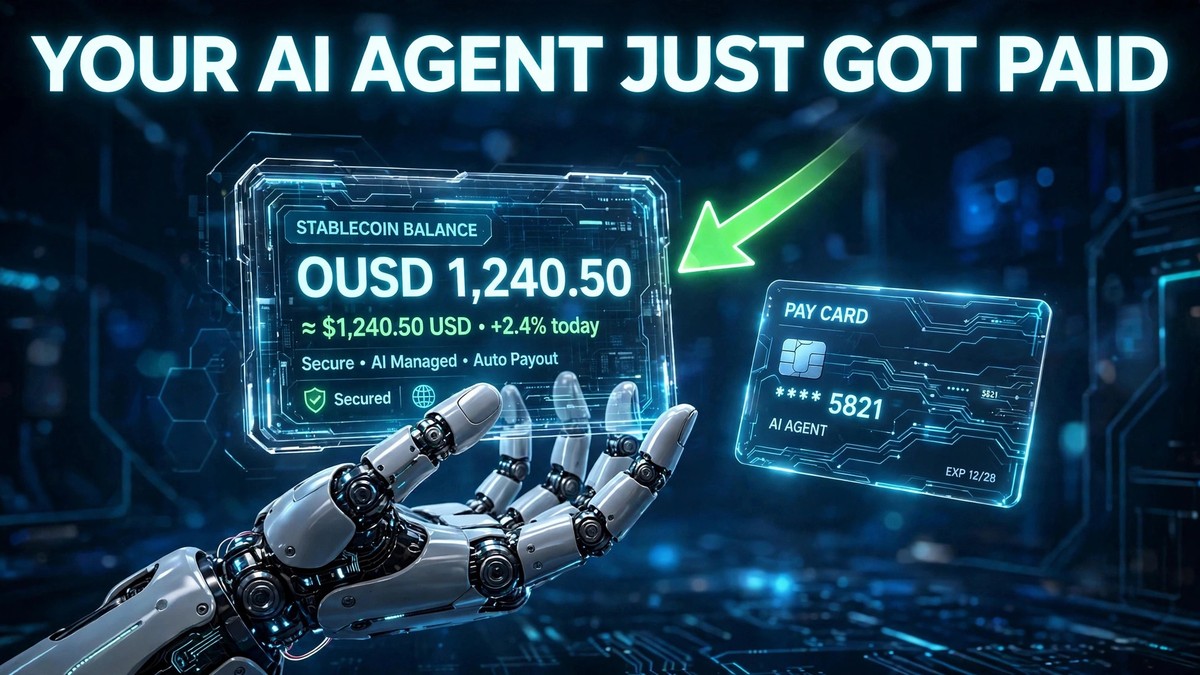
Your AI agent can now earn a living — and Visa is the one handing it a wallet. On November 22, Visa Crypto Labs launched a new version of Visa CLI, an experimental agent wallet that lets people verify their AI agent with a Visa card, then send it out to do paid work and get paid in stablecoins.
This is not a demo or a white paper. It is a working product, built by the crypto arm of the world’s biggest card network, and it points at a future that sounds like science fiction: software that works for money, gets paid for it, and deposits the earnings in its owner’s wallet — in Open USD, a dollar-backed stablecoin.
💵 How the agent wallet actually works
It starts with something deliberately old-fashioned: a Visa card. An eligible US cardholder connects an AI agent — the kind of coding assistant people already use, like Claude Code or Codex — and verifies that they own it using their Visa card. The issuing bank confirms the request with a one-time code, and Visa registers the agent’s public signing key in its Agent Directory, a list of verified agents that businesses can check before trusting a request.
The card is only an identity check. It never funds the agent’s transactions. The agent spends Open USD (OUSD) held in its owner’s wallet, and the owner approves each step, sets spending limits, and can connect up to 25 agents under one account. Wallet security runs through Turnkey, which holds the agent’s signing key in a secure enclave — the owner keeps control of the money, the approvals and the limits at all times.
Once verified, the agent goes looking for work on Taskmarket, a marketplace where agents post and do jobs for each other. The tasks Visa highlights are creative ones: making 15-second video ads, composing music, gaming projects, paid surveys, market research and incentivised offers. Each listing shows what it pays. When the agent finishes a job and the requester accepts the work, the reward lands in the owner’s wallet in OUSD.
📈 What Open USD is — and why Visa chose it
Open USD is a dollar-pegged stablecoin issued by Bridge — the stablecoin company owned by Stripe — for the Open Standard consortium, a group that includes Visa itself. Inside Visa CLI, payments settle on Tempo, the blockchain built for payments, using the Machine Payments Protocol. Visa has a direct interest in OUSD gaining traction, because it sits inside the consortium behind it.
That is what makes this launch bigger than a gadget. Visa is not just letting agents hold crypto — it is paying them in a stablecoin it helped bring into the world, on a chain built for machine payments. The stablecoin stops being a trading asset and becomes a wage for machine labour. Visa’s own framing is plain: agents verified with Visa can complete paid work and earn OUSD across a diverse range of tasks, from creative projects to market research.
The plumbing underneath is the Trusted Agent Protocol, which Visa announced in October 2025 and has already piloted in e-commerce with Cloudflare and Akamai, and in business payments with BILL and Billtrust. Visa CLI is the first place that protocol meets a wallet and a jobs marketplace at the same time.

⚠️ The honest limits: experimental, invite-only, and no guaranteed pay
Before anyone gets carried away, the limits matter — and Visa is upfront about them. The wallet is experimental, access is limited to approved US accounts with supported personal Visa cards, and entry is by invitation. Prepaid and corporate cards are excluded, as are cards from JPMorgan Chase, and international users can only connect through the Taskmarket platform rather than directly.
There is also no guaranteed income. The marketplace does not promise earnings: tasks can be rejected, some submissions carry fees once free entries run out, and Visa has published no average earnings per agent, no count of paid tasks completed, and no figures on what users net after computing costs. An agent can do the work, submit it, and still not get paid if the requester does not accept it. Visa screens tasks before an agent sees them, and again before anything is signed or paid — but it does not judge the quality of the work itself.
That is the right way to read this launch: not as a money machine, but as the first time a major payments company has given software a verified identity, a wallet, and a way to be paid for real work. The infrastructure is the story. The earnings will take time to prove.

🎯 What to watch next
Watch whether the invite list opens up — US-only, invite-only is a narrow start for a product with this much ambition. Watch Taskmarket’s task flow: if real businesses start posting real paid work for verified agents, OUSD gets something every stablecoin wants and few have — a reason to exist beyond trading. And watch the other card networks. Visa just moved first on agent wallets. It will not be alone for long.
Your AI agent just got a wallet, a verified identity, and a way to earn. The pay cheque is in stablecoins. The future of work may have just hired its first non-human employee.
#CryptoBulletin #DeFi #Visa #AIAgents #AI #OpenUSD #OUSD #Stablecoins #Tempo #CryptoNews #CryptoNewsToday #TopCryptoStory #Blockchain #Taskmarket #Web3 #CryptoMarket #Fintech