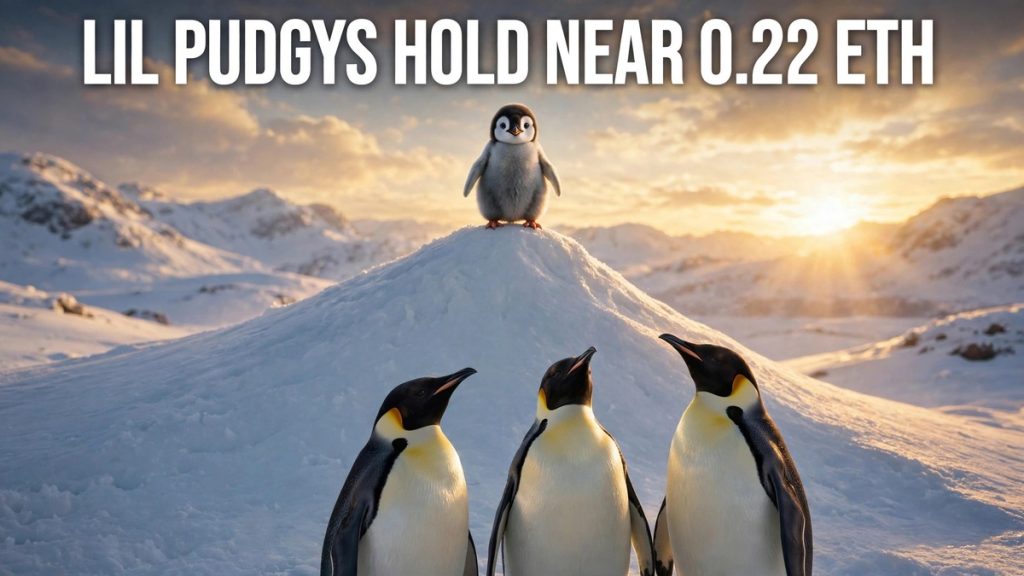
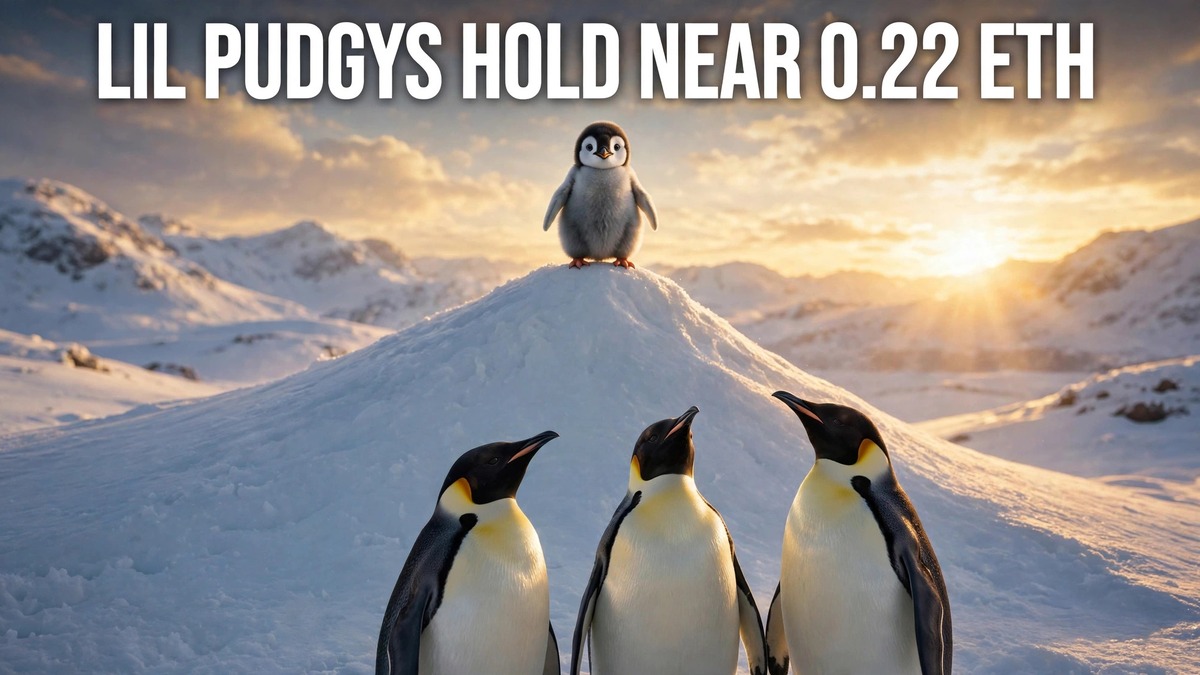
 Lil Pudgys Floor Holds Near 0.22 ETH as the Little Penguins Weather a Red Day
 Jensen Huang Is Back at Nvidia — and the Memecoin Market Lost Its Mind Overnight
 Saturn’s sUSDat Pays 11%+ — The Stablecoin Vault With a 3–7 Day Catch
 Kraken’s kBTC Vault Pulled In $30 Million on Day One — Bitcoin Yield Is Having a Moment
 Maple’s syrupUSDG Just Passed $200 Million — Its First New Syrup Asset in Two Years
 Ondo Just Tokenized Silver and Gold — SLVon and IAUon Bring Wall Street Metals Onchain
 Your Next House Deed Might Be an NFT — Real Estate Tokens Are Quietly Moving
 Pupkins: The NFT Game Where Your Pet Holds Real Stocks — and Everyone Is Talking About It
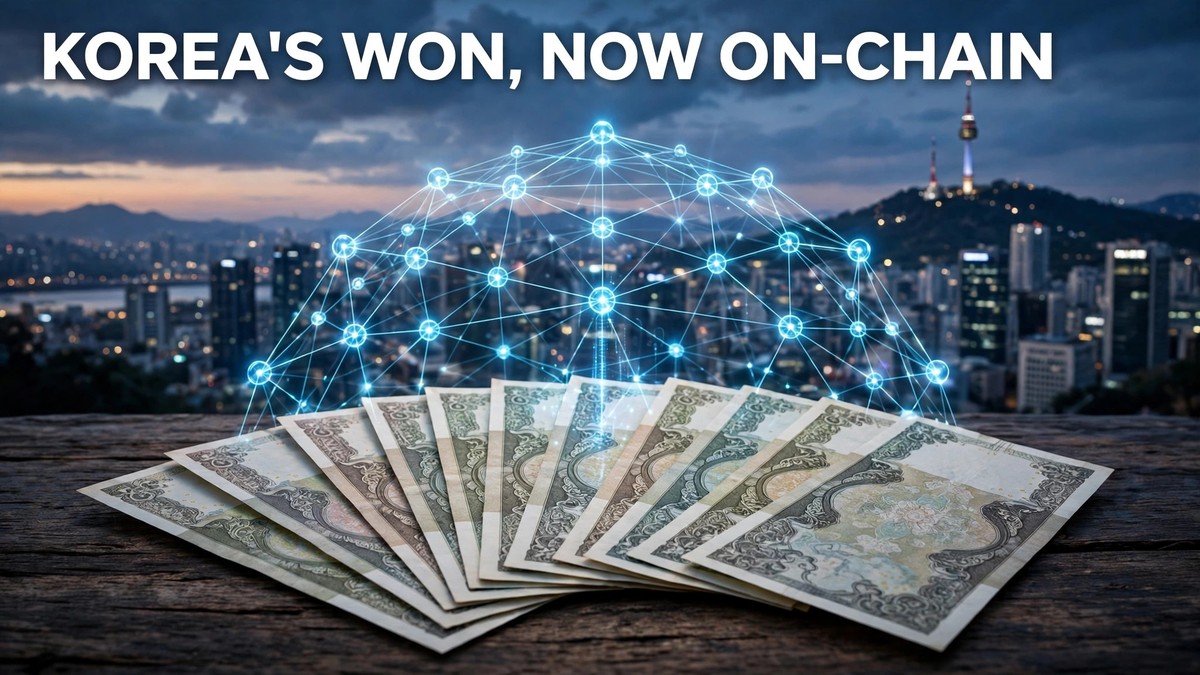
Korea has one of the most active crypto markets on earth — and until now, it has had no way to settle tokenized assets in its own currency. Injective and South Korean custody firm BDACS have agreed to fix that: their won-backed stablecoin KRW1 becomes the exclusive won-denominated settlement asset for tokenized real-world assets on the Injective network.
The deal, announced on October 20, 2026, means Korean institutions will be able to trade and settle tokenized assets directly in won, instead of routing every transaction through a dollar stablecoin first. In a market where the won is everything, that is a bigger deal than it sounds.
💵 What KRW1 is — and how it is backed
KRW1 is BDACS’s Korean won-pegged stablecoin, presented as Korea’s first stablecoin fully backed by the won. It is backed 1:1 by Korean won reserves, with the collateral held in escrow at Woori Bank and verified in real time through banking APIs, according to reports on the project. Its first proof of concept ran on Avalanche and concluded in September 2025.
BDACS is a registered virtual asset service provider in South Korea that builds custody and infrastructure for institutions, and it reported more than 80 billion won in assets under custody in the first half of 2026. The firm is the issuer of KRW1, and the agreement with Injective positions the stablecoin as the settlement layer for everything tokenized on the network — from tokenized RWAs to institutional settlement.
The logic is straightforward, and BDACS chief executive Harry Ryoo has said it plainly: without on-chain won infrastructure, demand in tokenized markets stays anchored to dollar stablecoins. A Korean institution buying a tokenized asset today takes foreign-exchange exposure it never asked for, because the settlement currency is dollars. KRW1 removes that step entirely.
📈 Why Korea needs this now
The timing is not an accident. Stablecoins have been leaving South Korea’s domestic exchanges for 18 consecutive months — net outflows from Upbit, Bithumb, Coinone, Korbit and Gopax to overseas platforms totalling about $10.4 billion since January 2025, according to Financial Supervisory Service data. Korean money is going offshore because the on-chain infrastructure at home has been missing, and a won settlement asset is the most direct way to start pulling it back.
The policy winds are shifting too. A day before this article, South Korea’s Financial Services Commission unveiled a draft bill that would lift the country’s nine-year ban on domestic ICOs and set rules for won-backed stablecoins — though it still needs parliament’s approval before anything changes.
Injective brings serious scale to the partnership. The network says it has handled more than $7.5 billion in RWA volume and issued more than $1 billion in tokenized assets, and it has been targeting tokenized financial products, including trade receivables, as its core use case. A won settlement layer slots directly into that machine.
⚠️ What the deal is — and what it is not yet
Here is the part that matters, and the part that should not be overstated. The agreement is a memorandum of understanding, not a finished integration. Minting and redemption of KRW1 will initially be restricted to approved institutional partners, and the whole arrangement remains subject to regulatory approval. The MOU creates a framework that is ready for a more detailed rollout if the rules allow it — it does not by itself authorise KRW1 issuance, guarantee a timetable, or settle the remaining policy questions around domestic stablecoin businesses.
It is also worth being precise about where KRW1 lives today: its live networks have been Ethereum, Avalanche and Arc — not Injective yet. The Injective integration is the plan, not the present reality. And the regulatory backdrop is still moving: South Korea is developing rules for won-backed stablecoins under its proposed Digital Asset Basic Act, which the government aims to finalise by the end of 2026, while the Bank of Korea has pushed for banks to anchor the market.
None of that makes the deal small. An exclusive settlement agreement, signed with a registered Korean custodian, for the only won-denominated settlement asset on a network with $7.5 billion in RWA volume — that is the foundation of a won-denominated on-chain market. It is just a foundation, not a finished building.
🎯 What to watch next
Watch the Digital Asset Basic Act first. If Seoul finalises the framework for won stablecoins by the end of 2026 as planned, KRW1’s path from MOU to live settlement gets much shorter. Watch for the first institutional mint on Injective, and for whether Korean financial institutions start bringing assets on-chain to settle in KRW1. And watch those $10.4 billion in outflows — if they slow, the won is finally coming home.
Korea trades crypto like nowhere else on earth. Now it is building the rails to settle it in its own money.
#CryptoBulletin #DeFi #Injective #BDACS #KRW1 #KoreanWon #Stablecoins #RWA #RealWorldAssets #CryptoNews #CryptoNewsToday #TopCryptoStory #Blockchain #SouthKorea #Web3 #CryptoMarket