 Massachusetts Could Ban Every Crypto ATM — Lawmakers Have Until January 5 to Decide
 POTS Money Just Lost $5.71 Million in Minutes — And Its Token Went Straight to Zero
 Strategy Gets Kicked Out of the MSCI Indexes Tomorrow — The $37 Billion Decision Hanging Over Bitcoin
 Binance Just Emptied Its SAFU Bitcoin Wallet — 7,500 BTC Out, $500 Million USDC In
 Cardano’s Big Upgrade Just Slipped to 2027 — And Its DJED Stablecoin Shuts Down on New Year’s Eve
 Dogecoin Price Today, Nov 29: DOGE Stares Down an 8th Straight Losing Week as ETF Flows Stall
 Bitcoin’s Brutal November: Down 24% With 11.1 Million Coins Underwater — Is $59,000 the Floor?
 Tether’s Secret Billionaire Exposed: Russian VC Quietly Holds a Multibillion-Dollar Stake in the $184B Stablecoin Giant
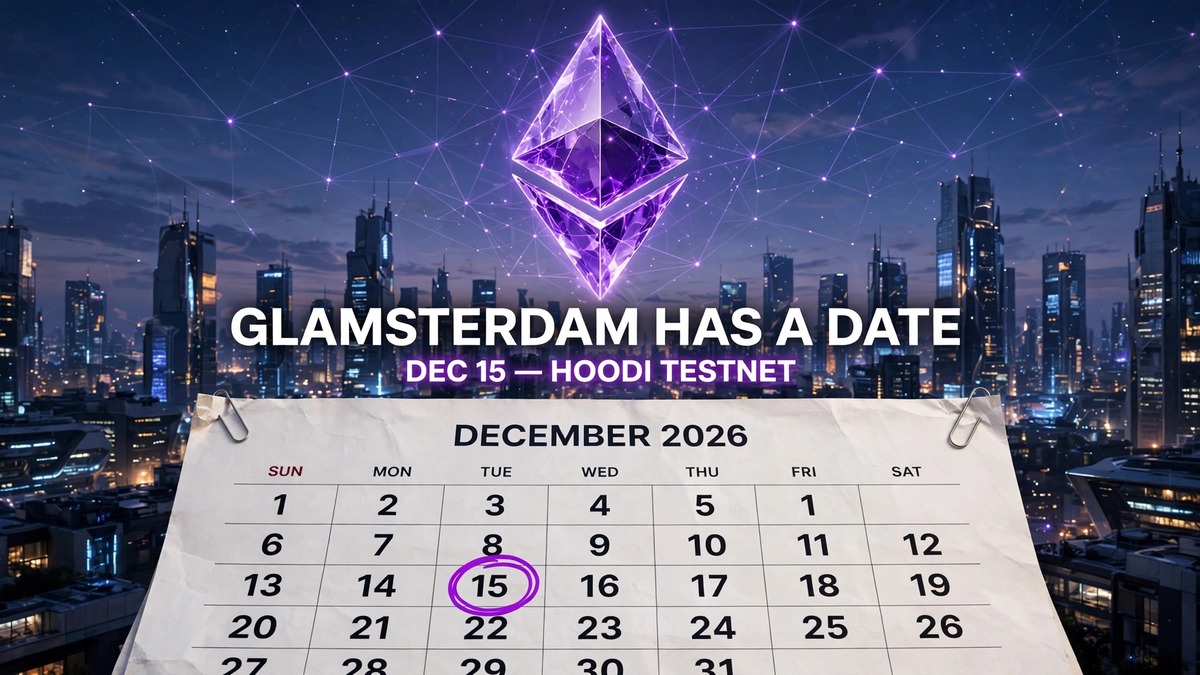
Ethereum’s next big upgrade finally has a date — and after nearly two months of delays, the relief in the developer community is almost audible. Core developers have agreed to activate the Glamsterdam upgrade on the Hoodi testnet on December 15, 2026, at 19:12 UTC, at epoch 143,616. The decision came at Thursday’s All Core Developers Consensus call, and it ends weeks of uncertainty about whether the upgrade would slip into 2027.
This is not a mainnet launch. Hoodi is a testnet, the final public testnet before the upgrade reaches the real Ethereum network, and the mainnet date remains unset. But after the delays, the arguments and the gas-pricing problems that stopped Glamsterdam in its tracks, a firm date on the calendar is a genuine step forward — and the market should read it that way.
💵 Why Glamsterdam slipped: the gas problem
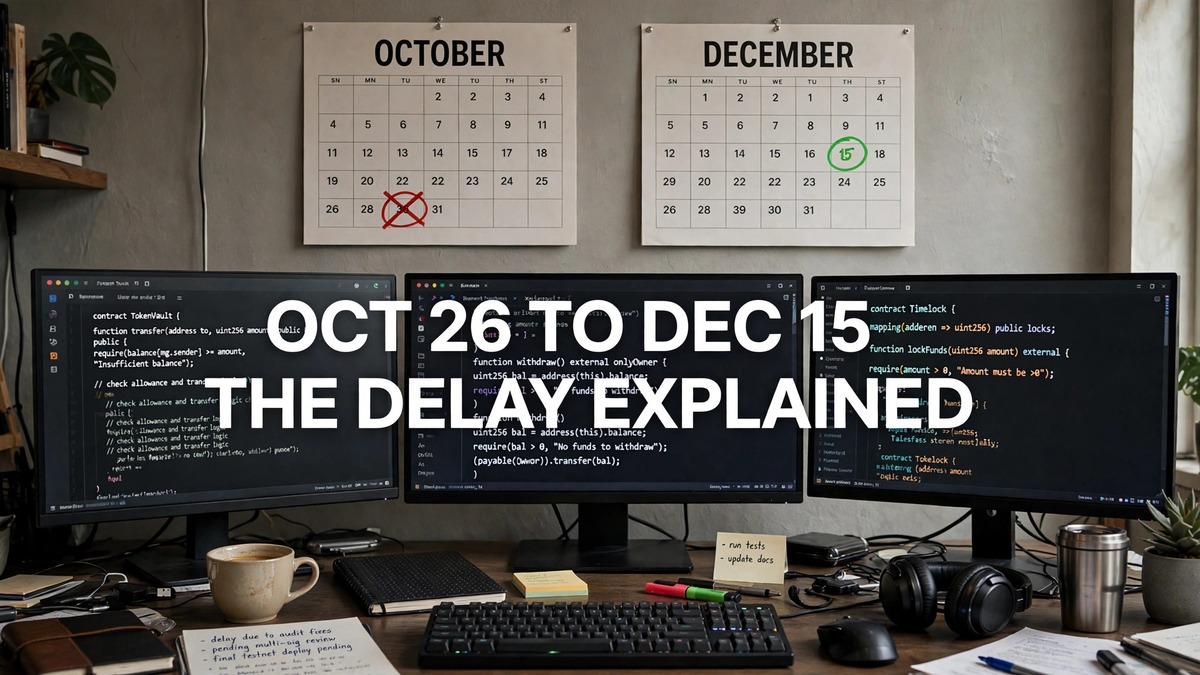
Glamsterdam was supposed to reach Hoodi on October 26. Four days before that date, on October 22, developers postponed the activation after testing found that the new gas rules in the upgrade — chiefly EIP-8037 and a companion proposal, EIP-8038 — could cause some deployed smart contracts to run out of gas and fail. That is not a minor bug. Smart contracts running out of gas mid-execution is the kind of failure that can break applications people depend on, and no developer team was willing to ship it.
The delay that followed was not a matter of days but of weeks, and the debate inside the developer community was real. Leaving the question open, Ethereum researcher and core developer Ansgar Dietrichs warned, would have pushed the Hoodi rollout into 2027. At Thursday’s call, the execution-layer teams reached rough consensus to proceed with the current Glamsterdam specification as it stands, despite concerns about potential breakage and the usability of the gas pricing changes.
That is a telling detail. The developers did not fix every concern before setting the date. They decided the specification is good enough to test, and that Hoodi is where the remaining questions get answered — by real contracts running under the new rules, not by more debate.
📈 What Glamsterdam actually does
Strip away the testnet politics and Glamsterdam is one of the most ambitious upgrades Ethereum has attempted. Its stated goals include enshrined proposer-builder separation, block-level access lists and a consensus mechanism update, alongside gas pricing that better reflects the real cost of executing operations on the network. The upgrade tracker lists 72 EIPs tracked for Glamsterdam, with 20 scheduled for the fork.
The gas changes are the heart of it — and the source of the trouble. Gas pricing is how Ethereum charges for computation, and getting it wrong means either overcharging users or undercharging for work that strains the network. EIP-8037 changes how gas is charged for certain operations, and the testing showed that some existing contracts, built under the old assumptions, could fail under the new ones. That is the trade-off at the centre of every Ethereum upgrade: improving the network without breaking what is already built on it.
Glamsterdam had already activated on the Sepolia testnet on October 6, which gave developers a first look at how the upgrade behaves in the wild. Hoodi is the final staging step — the last public testnet before mainnet — and it is where the upgrade faces its toughest audience: the full range of real-world contracts, including the ones that caused the delay in the first place.
Ethereum itself is trading near $1,651.54 at the time of writing, down about 1.23% over 24 hours, and roughly in line with a market where the Fear & Greed Index sits at 10 — deep in Extreme Fear. The upgrade news is not the kind of thing that moves the price in a day. It is the kind of thing that decides whether Ethereum is still improving while the price is down — and that is what long-term holders actually care about.
⚠️ Mainnet is still undated — and January is only the earliest window
Here is the honest part, and it matters. Nothing in Thursday’s decision sets a mainnet date. Ethereum Foundation developer Rahul Kothari said the week before the call that mid-January is the earliest viable date for mainnet activation — and that is a planning estimate, not a schedule. The three projects with the most severe compatibility issues had either applied fixes or expected to by mid-December, according to Kothari, while some medium-severity projects gave timelines as late as January 10.
Ethereum co-founder Vitalik Buterin has also warned against rushing the gas change, arguing that the new rules could break some existing contracts — a reminder that the December 15 date is a test, not a guarantee.
In other words, the December 15 Hoodi date is a checkpoint, not a finish line. If Hoodi goes well — if the contracts that worried developers hold up under the new gas rules — then a mid-to-late January mainnet window becomes realistic. If Hoodi exposes new problems, the date slips again, and nobody in the developer community will be surprised. Testnet dates are provisional until the fork activates and the chain follows the new rules.
There is one more caveat worth stating plainly. The Hoodi configuration change that actually schedules the fork was, as of Friday morning, an open pull request — agreed in the meeting, but not yet merged. The date is a decision, not yet a shipped parameter. That is normal for Ethereum development, but it is the difference between a plan and a done deal.

🎯 What to watch next
Watch December 15 first. The Hoodi activation at 19:12 UTC is the moment of truth for the gas changes — whether the contracts that threatened to break actually hold up, and whether any new failures appear that testing missed. A clean activation would be the strongest signal yet that mainnet is genuinely close.
Watch the client releases second. Client teams are expected to release versions for the Hoodi testnet upgrade early next week, and their readiness is the practical test of whether the December date holds. If the releases slip, the date slips with them.
And watch January. Mid-January is the earliest viable mainnet window, and the upgrade tracker forkcast lists a projected activation of January 27, 2027 — a planning estimate, not an announced date. The gap between the Hoodi test and a mainnet launch is where the real work happens — fixing whatever Hoodi breaks, and deciding whether the upgrade is safe enough for the network that secures hundreds of billions of dollars. Glamsterdam has a date at last. The hard part starts now.
Ethereum’s Glamsterdam upgrade reaches Hoodi on December 15. The testnet has a date — the mainnet still does not. The next four weeks will decide whether January is real.
#CryptoBulletin #Ethereum #ETH #ETHPrice #Glamsterdam #Hoodi #CryptoNews #CryptoMarket #CryptoNewsToday #CryptoMarketToday #TopCryptoStory #EthereumUpgrade #EIP8037 #Blockchain #Web3