 Massachusetts Could Ban Every Crypto ATM — Lawmakers Have Until January 5 to Decide
 POTS Money Just Lost $5.71 Million in Minutes — And Its Token Went Straight to Zero
 Strategy Gets Kicked Out of the MSCI Indexes Tomorrow — The $37 Billion Decision Hanging Over Bitcoin
 Binance Just Emptied Its SAFU Bitcoin Wallet — 7,500 BTC Out, $500 Million USDC In
 Cardano’s Big Upgrade Just Slipped to 2027 — And Its DJED Stablecoin Shuts Down on New Year’s Eve
 Dogecoin Price Today, Nov 29: DOGE Stares Down an 8th Straight Losing Week as ETF Flows Stall
 Bitcoin’s Brutal November: Down 24% With 11.1 Million Coins Underwater — Is $59,000 the Floor?
 Tether’s Secret Billionaire Exposed: Russian VC Quietly Holds a Multibillion-Dollar Stake in the $184B Stablecoin Giant

Kalshi has a problem, and it is not a small one. The prediction market platform built its business on sports contracts — and now more than 20 US states are suing it, arguing those contracts are illegal gambling, not financial instruments. So Kalshi is doing what any company under siege does: it is looking for a second business, one no court can take away. Its answer is America’s small businesses.
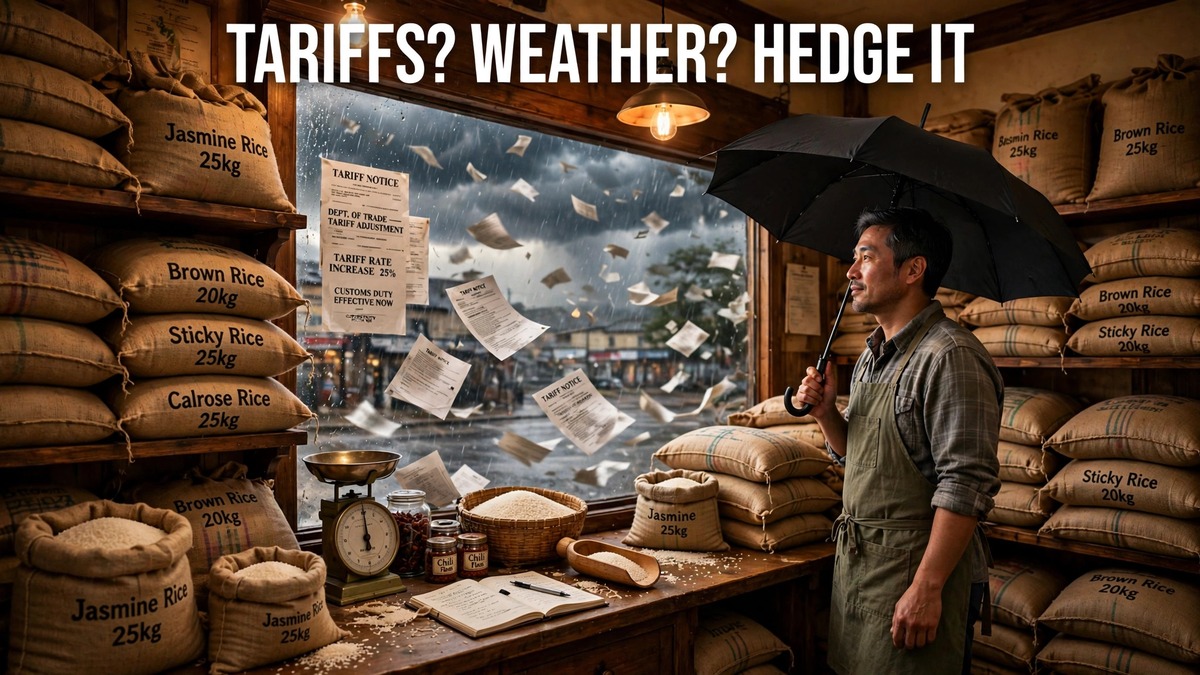
The pitch, reported by the Financial Times and CoinDesk on Friday, is simple enough to explain in one line: use prediction markets as a form of microinsurance. A rice importer worried about tariffs, a conference organiser worried about cancelled flights, a shop worried about a power cut — all of them can buy contracts that pay out if the bad thing happens. Kalshi’s business development director, Nicolas Hull, described the service as “almost a form of microinsurance.” About 500 companies have already used it to hedge risks, from commodity price swings to extreme weather and power outages.
It is a clever pivot. Whether it is big enough to save the company is a very different question.
💵 The rice company, the $9,000 hedge and the $60,000 payout
The example that brings the idea to life is a New York rice company called Not So Boring, which imports rice from India and is worried about tariffs. The company is considering spending about $9,000 on Kalshi contracts that would pay $30,000 if tariffs reach 30%, or $60,000 if they reach 50%. A $9,000 hedge against a $60,000 disaster — that is insurance pricing, not gambling, and that is exactly the point Kalshi wants to make.
There are other examples too. NEXTPredict, which runs a prediction markets conference, paid a $12,000 premium for Kalshi contracts that would have returned about $3 million if more than half of scheduled arrivals at New York’s JFK airport were cancelled the day before its October event, with trading firm Susquehanna taking the other side. The conference went ahead as planned, so the contracts did not pay out — but the structure worked exactly as designed: a small premium buying protection against a catastrophic outcome.
A new crop of brokers is using AI tools to find small businesses exposed to regulatory changes, such as tariffs or tax increases, and structure contracts for them to trade. The machinery is being built. The question is whether enough businesses will use it — and whether enough traders will take the other side.
📈 The hard part: finding someone to take the other side
Here is the problem Kalshi does not advertise. A prediction market only works if someone is willing to bet against you. A rice importer wanting tariff protection needs a trader willing to take the other side of that tariff bet — and specialised business risks are a long way from the sports bets that built Kalshi’s liquidity. Finding counterparties for a contract on Indian rice tariffs is much harder than finding someone to bet on a football game.
Kalshi is offering cash incentives to attract traders willing to take the other side of these specialised contracts, the Financial Times reported. And insurance broker Lockton told the newspaper it had not yet seen much uptake from its clients. That is the honest state of the business today: a good idea, a few hundred early users, and a liquidity problem that cash incentives have not yet solved.
It is also not Kalshi’s first attempt to move beyond retail betting. The company has struck a deal with Game Point Capital to enter the sports insurance market — a related but different bet on the same idea: that prediction markets can be insurance, not just speculation.
⚠️ The legal walls are closing in
The urgency behind the pivot is impossible to miss. Sports contracts still account for most of Kalshi’s trading — about 87% of the $39.7 billion traded on the platform in the year to February 2026, according to a Congressional Research Service report, with Kentucky alleging sports made up 89% of its 2025 volume. That is the business the states are trying to shut down.
Three of four federal appellate rulings have now favoured state oversight, according to reports, and the defeats are piling up in real time. Kalshi paused operations in Utah on Monday after failing to persuade a federal appeals court to halt the state’s enforcement actions, cutting off what the company said were more than 177,000 users. Utah’s attorney general then moved to dismiss the 14 criminal charges filed in October against Kalshi and its co-founders — but the dismissal is without prejudice, meaning the charges can be refiled. Seven prediction market companies have now agreed to stop operating in Utah.
Even as the legal walls close in, the sports business itself is booming. Thanksgiving Day NFL trading on Kalshi hit 264.2 million contracts — more than double the 128.9 million traded on last year’s holiday games — with 114.7 million contracts on the Eagles’ 39-38 win over the Cowboys alone. The demand is not the problem. The law is.
New York, where Kalshi is headquartered, is suing for at least $36 billion — and on November 23, Supreme Court Justice Melissa Crane denied Attorney General Letitia James’s request for a temporary restraining order that would have halted Kalshi’s sports contracts at once. The state says sports make up 85% of Kalshi’s trading volume. Crane set a November 30 deadline for an update on safeguards for traders aged 18 to 20, with a fuller hearing on whether to block the contracts set for early January.
The same week, a federal judge in New Mexico gave Kalshi 14 days to block sports contracts on the lands of four tribes — the Mescalero Apache Tribe and the Pueblos of Isleta, Pojoaque and Sandia. And the Commodity Futures Trading Commission, which has sued Utah to stop the state from shutting down CFTC-registered contract markets and started proceedings against nine other states, saw its emergency request to block Utah’s enforcement go ungranted. Benjamin Schiffrin of the nonprofit Better Markets told the Financial Times that prediction markets were “losing the battle” over whether sports contracts were financial products “or just gambling.” The company also faces international restrictions, and has published rules prohibiting trading in countries including the UK, France, Canada, Australia and Singapore.
🎯 What to watch next
Watch the courts first. The legal fight is the story that decides Kalshi’s future, and with three of four appellate rulings going against the industry, the momentum is with the states. Any Supreme Court decision to hear an appeal would change the picture overnight — and until then, every state action is another brick in the wall.
Watch the small-business numbers second. Five hundred companies is a start, not a business. If that number starts growing fast — and if the cash incentives succeed in bringing in counterparties — Kalshi will have a revenue line that does not depend on a single judge agreeing with it. If it stalls, the pivot will look like a press release, not a plan.
And watch the rest of the industry. Kalshi is the test case, but Robinhood and Crypto.com face the same legal arguments over their own sports event contracts, and a federal judge in San Francisco has just denied Robinhood’s bid to move class-action lawsuits over its sports contracts into arbitration. Whatever happens to Kalshi is likely to happen to them all.
Kalshi is betting that small businesses can replace sports bettors. It is a smart bet — and it may be the only one it has left.
#CryptoBulletin #Kalshi #PredictionMarkets #CryptoNews #CryptoMarket #CryptoNewsToday #CryptoMarketToday #TopCryptoStory #SmallBusiness #Tariffs #Blockchain #Web3 #SportsBetting #Regulation #Fintech