 Massachusetts Could Ban Every Crypto ATM — Lawmakers Have Until January 5 to Decide
 POTS Money Just Lost $5.71 Million in Minutes — And Its Token Went Straight to Zero
 Strategy Gets Kicked Out of the MSCI Indexes Tomorrow — The $37 Billion Decision Hanging Over Bitcoin
 Binance Just Emptied Its SAFU Bitcoin Wallet — 7,500 BTC Out, $500 Million USDC In
 Cardano’s Big Upgrade Just Slipped to 2027 — And Its DJED Stablecoin Shuts Down on New Year’s Eve
 Dogecoin Price Today, Nov 29: DOGE Stares Down an 8th Straight Losing Week as ETF Flows Stall
 Bitcoin’s Brutal November: Down 24% With 11.1 Million Coins Underwater — Is $59,000 the Floor?
 Tether’s Secret Billionaire Exposed: Russian VC Quietly Holds a Multibillion-Dollar Stake in the $184B Stablecoin Giant
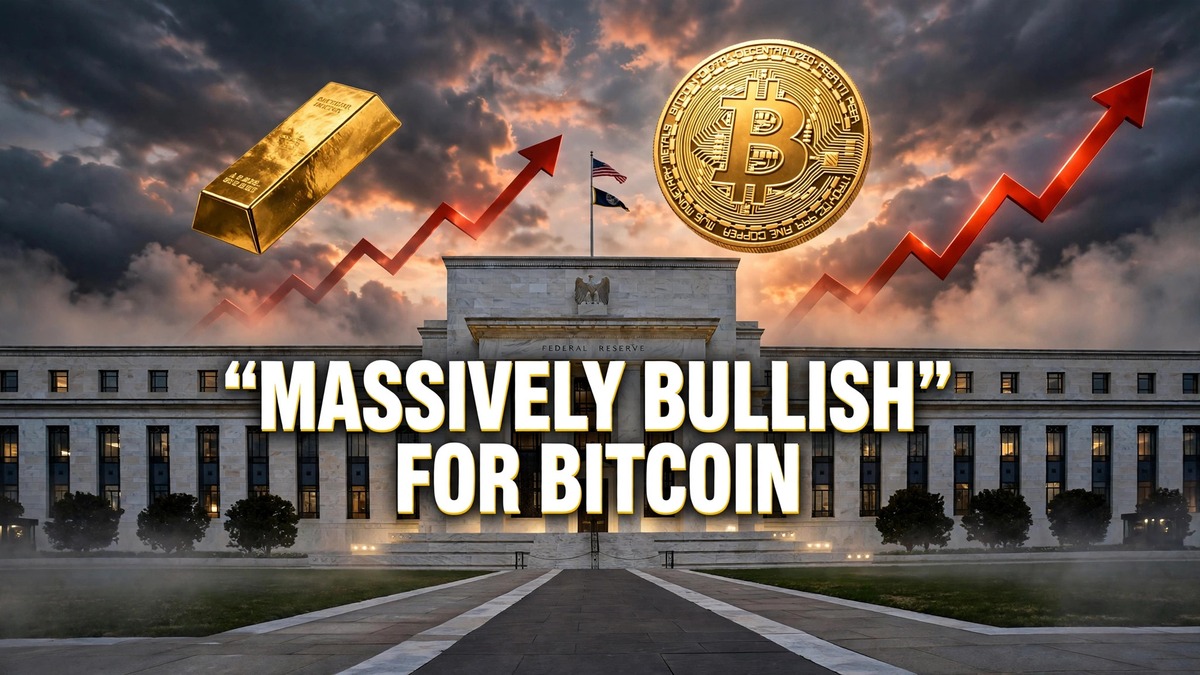
What if the Federal Reserve simply gave up on 2% inflation? That is the question now being debated in Washington — and one senior economist thinks the answer would be very good news for Bitcoin, eventually. Peter St. Onge, Senior Economist at The Heritage Foundation, told Bitcoin Magazine on Friday that abandoning the Fed’s 2% inflation target would be “massively bullish” for Bitcoin over the long term. The catch, he is quick to add, is that the short term would hurt first.
This is an opinion, not a forecast — and it is worth treating it as one. But it comes at a moment when the Fed’s inflation fight is visibly failing, the December meeting is suddenly about a hike rather than a cut, and the idea of moving the goalposts is being raised by people the market actually listens to.
💵 The proposal: from 2% to 3%
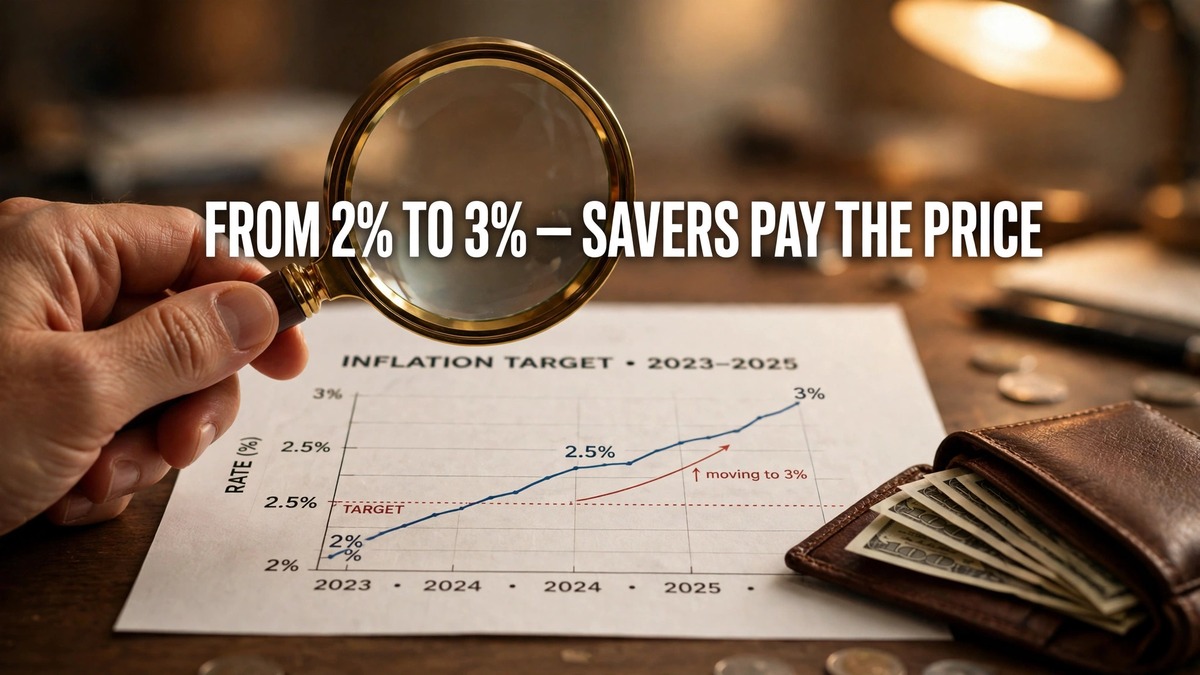
The debate St. Onge was responding to started with billionaire investor Bill Ackman, who has proposed raising the Fed’s inflation target from 2% to 3%. The logic is simple enough: inflation is running near 4%, the Fed is hiking rates to fight it, and the 2% target is looking increasingly out of reach. Rather than keep missing the target, Ackman’s argument goes, move the target to somewhere achievable.
St. Onge’s response cuts both ways. In the near term, he says, a higher target would be a hit to Bitcoin and gold. Inflation near 4% with the Fed hiking is, in his words, “sucking all of the oxygen out of any kind of hard money assets for the moment.” Rate hikes punish assets that do not pay a yield, and Bitcoin is first in line.
But the long term is a different story. A Fed that officially accepts 3% inflation is a Fed that has told savers their money will lose value faster, every year, forever. And savers who watch their purchasing power melt tend to look for somewhere else to put it. “Long term, massively bullish for both of them,” St. Onge said, meaning Bitcoin and gold. His argument is that persistently higher inflation drives demand for hard-money hedges — assets nobody can print more of.
He is blunt about who pays for it. A move to a 3% target, he argues, would hit savers and young people hardest — the people trying to build wealth from wages while their money loses value. And he argues Washington is “addicted to inflation” after COVID and the war in Iran, dependent on the very thing it claims to be fighting.
📈 Why the timing matters: PCE at 3.8%, a hike in December
The debate is not happening in a vacuum. October PCE inflation is confirmed at 3.8% year-on-year, the second-highest reading since April 2023, and markets now price roughly a 98% chance of a 25 basis point hike at the Fed’s December 8-9 meeting. Not a cut. Not a hold. A hike — and Fed Governor Waller has refused to rule out 50 basis points.
Bitcoin felt the print first, falling to $57,300 on November 25 before fighting back above $60,000. At the time of writing it is trading near $59,743, down about 2.95% over 24 hours, and down roughly 23% in November. Ethereum is near $1,656.21. The Fear & Greed Index is at 10 — deep in Extreme Fear.
That is the near-term pain St. Onge is talking about. A Fed that hikes into a weak market hurts every risk asset, and Bitcoin — with no yield, no dividend and no central bank backstop — feels it first. The “massively bullish” part of his argument only kicks in later, once the higher inflation target is accepted and the slow erosion of purchasing power starts pushing savers toward alternatives.
St. Onge also has a darker warning attached to the same picture. He argues the US economy’s reliance on AI investment is masking broader weakness, and that rising borrowing costs could make AI projects unprofitable. “We could, I think, be looking at something like a 2008 crash led by AI,” he cautioned — a crash in which Bitcoin and gold would initially fall alongside equities, before monetary easing and liquidity injections fuelled a recovery over roughly 18 months.
⚠️ Bitcoin versus gold — and the $40 trillion question
The most striking part of St. Onge’s argument is the long horizon. With US federal debt now exceeding $40 trillion, he questions whether the fiat monetary system is sustainable in its current form — and sketches two scenarios for what comes next.
In the first, a monetary crisis arrives within 10 years. Gold, he says, would emerge as the primary beneficiary, because it has the established financial infrastructure — the vaults, the markets, the central bank buyers — to absorb a flight to safety. In the second, the crisis takes 20 to 30 years to arrive. By then, he argues, Bitcoin could have gained enough adoption to share gold’s monetary role, particularly as younger generations accumulate wealth. He describes Bitcoin as a “fundamentally superior technology to gold” — while acknowledging the uncertainty over timing.
That is the honest version of the bullish case, and it is worth hearing in full. It is not “Bitcoin to the moon next week.” It is: if the Fed gives up on 2%, savers lose, hard assets win, and over a generation Bitcoin could stand alongside gold as money. It is also, by his own admission, a story that starts with pain — a hike in December, a possible AI-led crash, and a year or more of difficulty before any recovery.
None of this is settled policy. The Fed has not changed its target, Ackman’s proposal is a proposal, and St. Onge is one economist’s voice. But the fact that the debate is happening at all — in public, from serious people — tells you how far the inflation conversation has moved in a single month.

🎯 What to watch next
Watch the Fed’s December 8-9 meeting first. A hike would confirm that the inflation fight is still the priority — and that any talk of a higher target is for later, not now. Any hint that officials are softening on 2% would be the real signal.
Watch Ackman’s proposal second. If it gains traction among policymakers or other major investors, the target debate moves from the fringes to the mainstream — and the long-term case for Bitcoin gets a lot louder.
And watch the savers third. The whole argument rests on people noticing their money losing value and acting on it. If inflation stays near 4% and the target quietly drifts upward, the flow into hard assets will not announce itself with a headline. It will show up, slowly, in the price of Bitcoin and gold — over years, not days.
“Massively bullish” — eventually. Painful first. That is the deal the Fed’s 2% target is offering Bitcoin right now.
#CryptoBulletin #Bitcoin #BTC #BTCPrice #FederalReserve #Inflation #CryptoNews #CryptoMarket #CryptoNewsToday #CryptoMarketToday #TopCryptoStory #BitcoinPrice #Ethereum #Gold #Altcoins