 Lil Pudgys Floor Holds Near 0.22 ETH as the Little Penguins Weather a Red Day
 Jensen Huang Is Back at Nvidia — and the Memecoin Market Lost Its Mind Overnight
 Saturn’s sUSDat Pays 11%+ — The Stablecoin Vault With a 3–7 Day Catch
 Kraken’s kBTC Vault Pulled In $30 Million on Day One — Bitcoin Yield Is Having a Moment
 Maple’s syrupUSDG Just Passed $200 Million — Its First New Syrup Asset in Two Years
 Ondo Just Tokenized Silver and Gold — SLVon and IAUon Bring Wall Street Metals Onchain
 Your Next House Deed Might Be an NFT — Real Estate Tokens Are Quietly Moving
 Pupkins: The NFT Game Where Your Pet Holds Real Stocks — and Everyone Is Talking About It
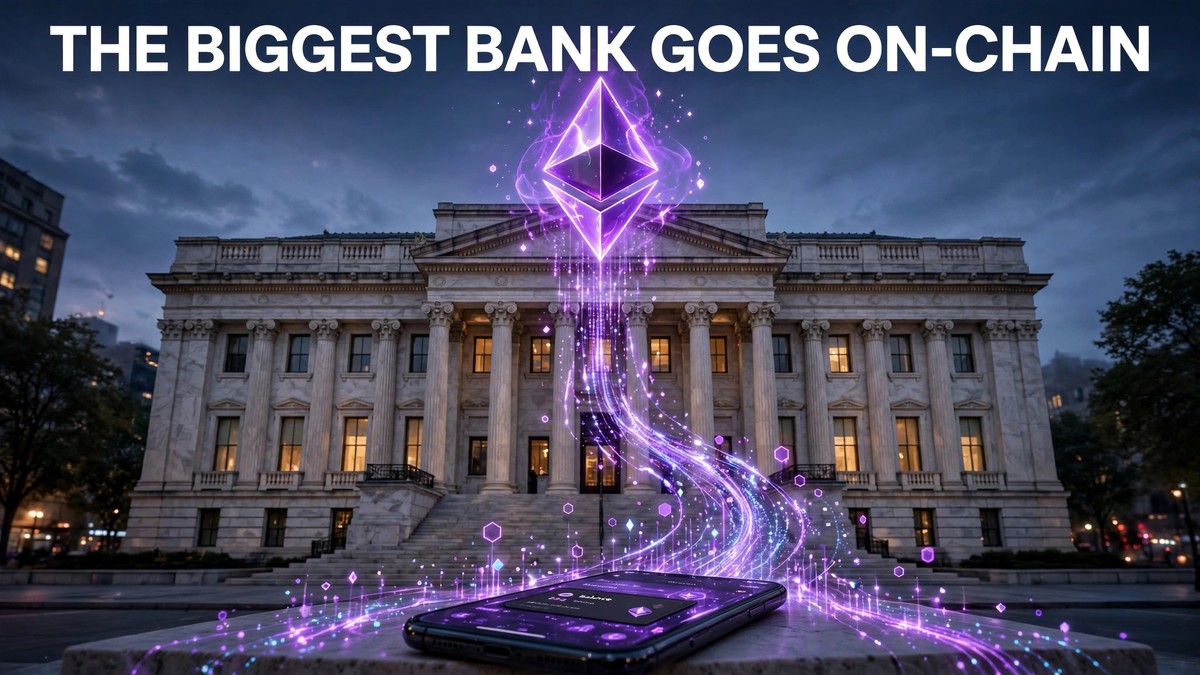
The largest bank in America has a token on Ethereum, and it pays yield. J.P. Morgan Asset Management’s My OnChain Net Yield Fund — MONY — is the firm’s first tokenized money market fund, launched on the public Ethereum blockchain in December 2025 and built on Kinexys Digital Assets, the bank’s own tokenization platform. It is the first time the biggest global systemically important bank has put a money market fund on a public chain, and the number that matters now is how fast the pile behind it is growing.
MONY was seeded with about $100 million from J.P. Morgan before opening to qualified investors, and by late October 2026, reporting put J.P. Morgan’s disclosed tokenized funds at nearly $900 million — about $792 million in its JLTXX tokenized liquidity fund and about $103 million in MONY, both on Ethereum. JLTXX has since eased to about $727 million as of November 23, according to J.P. Morgan’s own fund page, down from about $795 million at the end of October. That is still a real balance sheet on-chain, not a pilot — even if it has cooled from its late-October peak.
💵 Treasuries, repo, and a token in your wallet
MONY is deliberately boring, and that is the point. The fund invests only in traditional US Treasury securities and repurchase agreements fully collateralized by US Treasury securities, letting qualified investors earn dollar yields while holding the token on the blockchain. It offers daily dividend reinvestment, and investors can subscribe and redeem using cash or stablecoins through Morgan Money, J.P. Morgan’s institutional liquidity platform — the first institutional liquidity trading platform to integrate traditional and on-chain assets, according to the bank.
Access is narrow by design. MONY is a 506(c) private placement fund, available exclusively through Morgan Money to qualified investors — individuals with at least $5 million in assets or institutions with $25 million or more, with a reported minimum investment of $1 million. Tokens land at investors’ blockchain addresses, and the tokenization brings what the bank calls increased transparency, peer-to-peer transferability, and the potential for broader collateral usage inside the blockchain ecosystem.

📈 The sibling fund is the bigger story right now
MONY’s bigger sibling, the JPMorgan OnChain Liquidity-Token Money Market Fund (JLTXX), is where the scale lives. JLTXX took its first $200 million in May 2026, reached about $800 million by the end of July, and ended October at $795.1 million after $906.1 million flowed in and $739.5 million flowed out in that month alone. Its seven-day net yield was 3.82% on October 30, and its fact sheet put the seven-day SEC yield at 3.91% as of October 31.
And J.P. Morgan is still iterating. A prospectus filed with the SEC on November 23 now lets JLTXX mint token balances to a buyer’s blockchain address the same day a purchase order is accepted and payment received — even before the order reaches the fund’s official shareholder record — with the fund able to claw back or adjust those tokens if registration never happens. The filing also folds in an October supplement adding Solana, so Ethereum and Solana are now the only blockchains available to JLTXX investors. Speed first, paperwork catching up behind it.
⚠️ Boring is the feature — and the limit
There is a reason MONY matters more than its size suggests. Money market funds are where the world’s cash sleeps — trillions of dollars earning a few percent in the most conservative vehicle finance has. Putting that vehicle on Ethereum, with tokens that can move peer-to-peer and potentially serve as collateral, is the tokenization thesis in its purest form: not a new asset, but an old asset in a new shape that can travel further and settle faster.
But the limits are real too. MONY is for qualified investors only, gated behind Morgan Money, with a $1 million minimum. It is not a stablecoin — the prospectus is careful on that point — and its tokens are not for the public. The revolution here is institutional plumbing, not retail access. And as with every tokenized fund, the blockchain adds risks the old paper version never had: smart contract risk, network risk, and recordkeeping processes that can complicate resolving issues when something goes wrong.

🎯 What to watch next
Watch the combined total first: if J.P. Morgan’s tokenized funds push past $1 billion, the story stops being an experiment and starts being a business line. Watch whether MONY’s collateral-usage promise becomes real — a money market token accepted as collateral across DeFi would be a bigger deal than the fund itself. And watch the other banks, because the largest bank in America just showed them the door is open. The question now is who walks through it next.
#CryptoBulletin #DeFi #JPMorgan #MONY #TokenizedFunds #Ethereum #Kinexys #Stablecoins #Treasuries #RWA #CryptoNews #CryptoNewsToday #Blockchain #Web3 #CryptoMarket #MoneyMarket