 South Korea Just Ended Its 9-Year ICO Ban — And Handed Won Stablecoins to the Banks
 Binance and OKX Just Froze 27,304 Wallets — And Innocent Users Have Until TODAY to Fight Back
 Bitcoin Just Lost $60,000 AGAIN — Down 8% From $64,500 as Gold Suffers Its Worst Crash in 44 Years
 Bitcoin ETFs Just Had Their Worst Month EVER — $4.71 Billion Gone — While BlackRock’s IBIT Shares Jumped 5%
 Bitcoin Falls Below $60,000 Again — Monday’s $64,600 Nvidia Rebound Is Already Gone
 Monad Just Unlocked $190 Million in Tokens — More Than Its Entire Market Cap — and MON Is Already at a Record Low
 Ethereum Just Doubled Its Security Team for a Fight ‘Harder Than the Merge’ — $72 Billion in ETH Is Exposed to Quantum Computers
 US Exchanges Can Now Count Bitcoin and Ether Toward Their Operating Reserves — The CFTC Just Said Yes
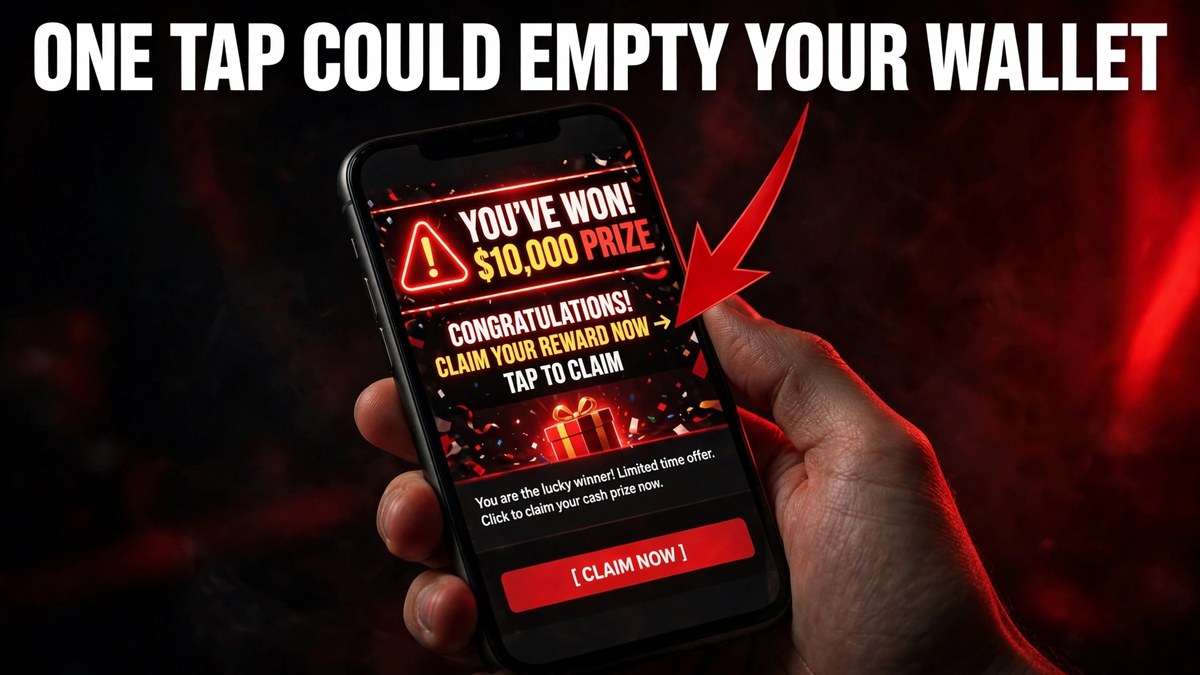
You are scrolling on your iPhone, you tap an ad without thinking twice, and nothing seems to happen. No download, no warning, no strange pop-up asking you to approve anything. But behind that single tap, your crypto wallet could already be open to a thief. That is the warning at the heart of a new security report that has set the crypto world talking today — and if you keep a wallet on your phone, it is one you should not scroll past.
Security firm Confiant published its findings on November 20, and the story has spread fast across crypto media today. The campaign is called MoldyRoost, and it is not a small operation. Between May 12 and November 17, researchers linked more than 480 advertising domains to it, reaching users in over 47 countries, with Hong Kong, Japan and Singapore hit hardest. The ads looked ordinary — travel deals, games, crypto services — but the pages behind them were built for one purpose: stealing wallet recovery phrases.
⚠️ How One Tap Is Enough
Most phone scams still need you to do something wrong — download a file, paste a command, approve a transaction. MoldyRoost is different, and that is what makes it scary. The attackers bought ad placements through the same automated advertising systems that serve ads on legitimate websites and apps. When an iPhone user tapped one of those ads, the landing page did the rest on its own.
“Just loading the landing page of a MoldyRoost ad on a vulnerable iPhone is enough to get infected,” the Confiant researchers wrote. The page quietly checks the phone’s iOS version, picks a matching exploit, and runs it while the page loads. There is no file to download and no second click. On a vulnerable phone, the damage starts before the user has time to realise anything is wrong.
The Four Exploit Kits Behind It
Confiant traced the attack to four exploit toolkits, each matched to different iOS versions. Coruna targets iOS 13 through 17.2.1, chaining 23 exploits across five chains. DarkSword targets iOS 18.4 through 18.7, chaining six vulnerabilities — including three zero-days, flaws Apple did not know about when they were used. SilkPath and GhostWave fill the gaps for versions in between and newer releases, though researchers recovered no working payload for the newest iPhones.
These are not tools MoldyRoost built from scratch. Google’s Threat Intelligence Group and security firm iVerify documented Coruna and DarkSword back in March 2026. What is new is how they are being delivered — not through shady downloads, but through paid ads on the open internet.
What the Attackers Are After
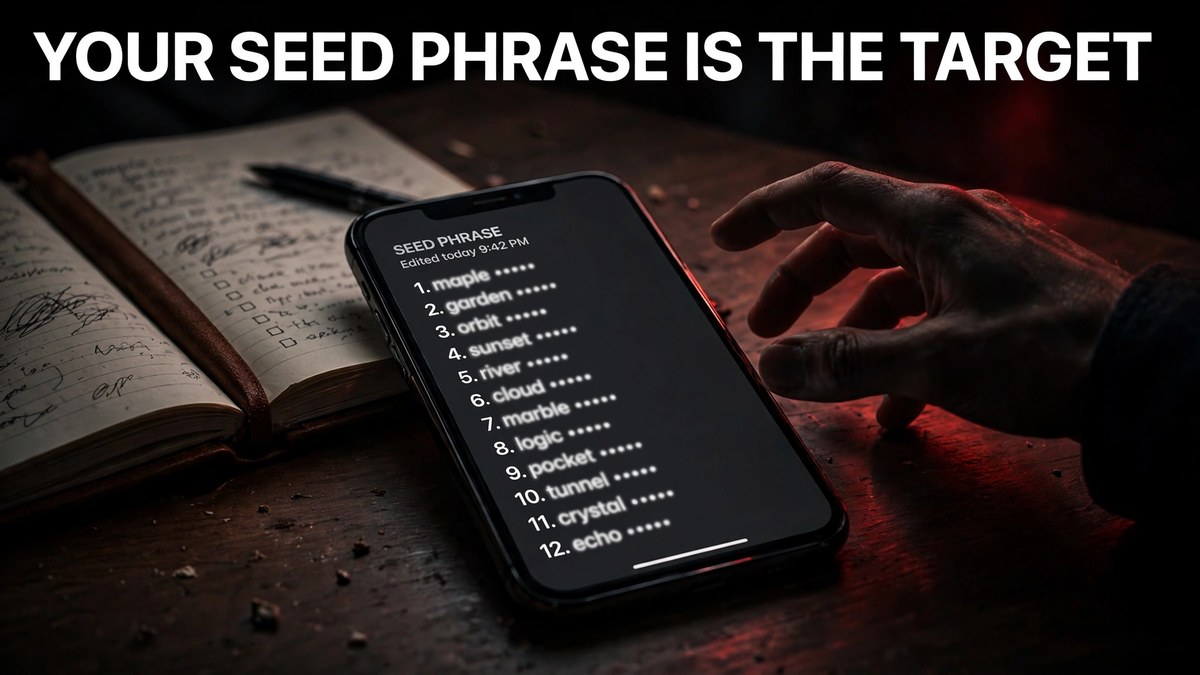
The prize is the seed phrase — the 12 or 24 words that act as the master key to a crypto wallet. Anyone holding it can open the wallet on another device and move the funds, and unlike a bank password, a seed phrase cannot be changed or reset.
Coruna’s implant hooks wallet apps such as MetaMask, Phantom and Trust Wallet, and hunts for seed phrases saved in Apple Notes and QR codes in saved photos. Researchers also found wallet-specific code for Bitget Wallet, Tonkeeper and OKX Wallet. DarkSword casts an even wider net, sweeping up keychain passwords, messages, saved Wi-Fi passwords, photo metadata and location history in a single pass.
Here is the part nobody can yet put a number on: how many wallets were actually drained, and how much crypto was taken. Confiant’s report measures the advertising infrastructure — the 480-plus domains — not confirmed infections, and the research does not establish how many victims there were or the value of stolen funds. So treat the scale of the losses as unknown, but the danger itself as very real.
Who Is Safe — and Who Is Not
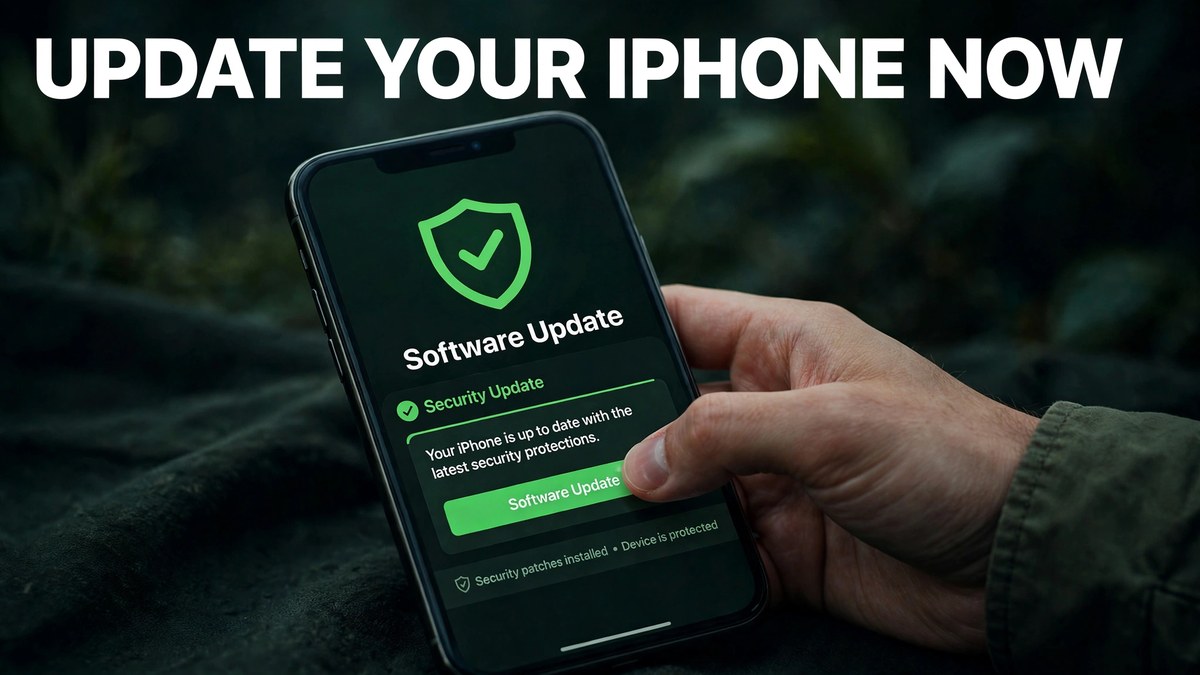
The good news is that updated iPhones look safe. The known hacking tools target iOS versions through iOS 18, and researchers found no confirmed exploit code for fully updated iOS 26. Apple fixed all six DarkSword flaws in iOS 26.3, with the same fixes in iOS 18.7.7 — and newer patches have followed since. As of today, Apple’s latest releases are iOS 27.2.1, iOS 26.7.3 and iOS 18.7.12, all released on November 9. Apple’s Lockdown Mode also blocks these attacks, according to the researchers.
The risk sits with older, unpatched iPhones — and with anyone who stores a seed phrase on their phone. If your recovery words live in Apple Notes, in a screenshot, or in a saved photo, this campaign was built to find them.
What To Do Right Now
First, update your iPhone today — to the latest release your device supports: iOS 27.2.1, or iOS 26.7.3, or iOS 18.7.12 if your device must stay on iOS 18. Second, get your seed phrase off your phone entirely: write it on paper, store it offline, and never photograph it. Third, if you cannot update, switch on Lockdown Mode, which Apple says blocks these specific attacks. And from now on, treat every ad like it could be a trap — because in the MoldyRoost campaign, that is exactly what some of them were.
Bitcoin is holding above $61,000 today and the market is finally breathing again — but a green market means nothing if your wallet is the one that gets emptied. One tap is all it takes. Update your phone before the next ad finds you.
#CryptoBulletin #Bitcoin #CryptoNews #iPhone #CryptoSecurity #MoldyRoost #WalletSecurity #SeedPhrase #MetaMask #Phantom #TrustWallet #CryptoHack #Malvertising #iOS #Blockchain #Web3 #CryptoSafety