 Japan’s $2.3 Trillion Banking Giants Just Went All-In on Solana — SBI Solana Global Is Live
 Binance Is Pausing All Withdrawals Today — One Hour of Maintenance, and Traders Are Watching
 Ansem’s Wallet Drained of $2.57M as His Own Token Crashes 60% — Hack or Inside Job?
 Lil Pudgys Floor Holds Near 0.22 ETH as the Little Penguins Weather a Red Day
 Jensen Huang Is Back at Nvidia — and the Memecoin Market Lost Its Mind Overnight
 Saturn’s sUSDat Pays 11%+ — The Stablecoin Vault With a 3–7 Day Catch
 Kraken’s kBTC Vault Pulled In $30 Million on Day One — Bitcoin Yield Is Having a Moment
 Maple’s syrupUSDG Just Passed $200 Million — Its First New Syrup Asset in Two Years

South Korea just tore up nine years of crypto history in a single afternoon. On Tuesday, the country’s top financial regulator unveiled a draft law that lifts the ban on domestic ICOs — in place since September 2017 — and hands the keys to won-pegged stablecoins to the banks. For one of the biggest crypto markets on the planet, this is the most important rulebook rewrite since the first crypto law arrived.
The Financial Services Commission, the FSC, published its draft of the Act on the Innovation of the Digital Asset Industry and Protection of Users at a meeting of its Virtual Asset Committee. It is the second phase of South Korea’s crypto framework, and it covers the parts the first law never touched: stablecoins, token sales, and who is allowed to own an exchange.
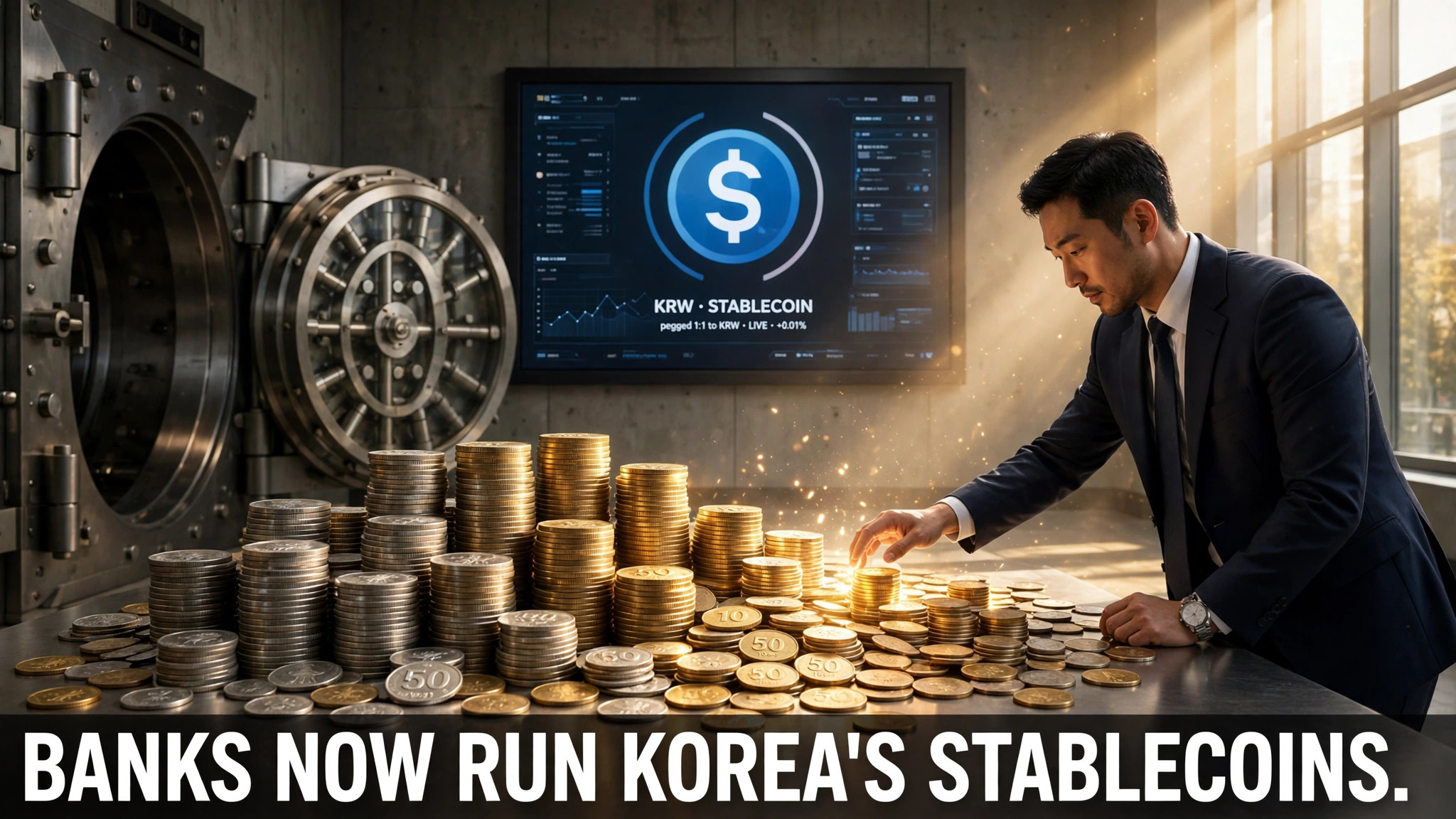
💵 The Banks Get the Stablecoins First
Here is the headline change. Won-pegged stablecoins will be allowed — but only bank-led groups get to issue them first. A consortium can launch a won stablecoin only if banks collectively hold more than 50% of it, and the group holds at least 5 billion won — about $3.4 million — in capital.
The rules around those stablecoins are strict. Issuers must hold reserves covering 100% of the tokens in circulation, kept at banks, and redeem every token at par whenever a holder asks. No interest can be paid to holders. Monthly reserve audits are part of the package too.
The door is not shut to everyone else forever. Tech giants like Naver, Kakao or Toss could still be the largest single shareholder in a consortium, making the key product and technology calls, as long as banks hold the majority together. And once the system is up and running, non-bank groups could be allowed to issue as well. But the message from the regulator is unmistakable: the banks go first.
There is also a door open for the stablecoins the world already uses. Tether’s USDT and other offshore stablecoins could circulate inside South Korea if they meet the FSC’s standards — though foreign issuers would need to set up local branches and win regulatory approval first.
🎯 The ICO Ban Is Finally Over
The second bombshell is the ICO ban. South Korea outlawed initial coin offerings in September 2017, at the height of the first ICO boom, and the ban has stood untouched for nine years. Under the new draft, domestic ICOs come back — provided the issuer files a whitepaper with the FSC before launching and discloses enough information for investors to judge the project.
That is a genuine reversal. For nearly a decade, Korean startups that wanted to raise money by selling tokens had to go abroad to do it. Now the path home is open, even if the disclosure bar is high. The FSC is clearly betting that transparency rules can do the job the blanket ban used to do.
The draft opens another door too: market-making. Firms licensed to trade digital assets for their own account would be allowed to act as liquidity providers, posting buy and sell quotes after signing a contract with an issuer or an exchange. It is the kind of plumbing that makes a market work properly — and it has been missing from Korea’s regulated market until now.
⚠️ The Part That Caught the Industry Off Guard
Not everything in the bill is a gift. The provision that has the industry rattled is the ownership cap on crypto exchanges. No major shareholder would be allowed to own more than 20% of an exchange in principle — a figure borrowed from the rules for alternative trading systems in the capital market — rising to 34% only with explicit FSC approval. Existing operators like Upbit and Bithumb would get a three-year grace period to comply.
That is a direct hit on how Korea’s biggest exchanges are owned today. Dunamu, the operator of Upbit, and Bithumb both have concentrated ownership, and the industry had been lobbying hard against the cap. The FSC kept it anyway — and even added that voting rights on shares above the limit would be restricted.
The exchanges would also be split into three separate licensed businesses: trading, brokerage and custody. Running an exchange would require all three licences, with internal controls and IT security standards comparable to traditional finance, including continuous monitoring of customer assets.

🔑 What Happens Next
This is a draft, not a law. The bill now heads to the National Assembly, where lawmakers will debate it and may merge it with competing proposals. The ownership rules and other details could still change in parliament and in the enforcement decrees that follow.
Even if it passes as written, nothing happens overnight. Stablecoin issuance would only begin about a year after the law is promulgated, once issuer licensing and issuance approvals are in place. So the won stablecoin era is coming — but it is still a year or more away.
The wider market, meanwhile, is still in a deep freeze. Bitcoin was trading near $60,274 on Tuesday, down about 1.4% on the day, with Ethereum around $1,698. The Crypto Fear & Greed Index sat at 11 — Extreme Fear for a tenth straight day — even as November’s record $4.71 billion in Bitcoin ETF outflows kept piling up.
🔑 The Takeaway
South Korea just did two things at once: it opened the door to won stablecoins and domestic ICOs for the first time in nine years — and it told the banks they go first, and told exchange owners they can own at most a fifth of the business. The country that trades some of the most crypto on earth is finally writing its second rulebook. The question now is whether parliament passes it, and how fast the banks move once it does.
#CryptoBulletin #SouthKorea #Stablecoins #ICO #CryptoNews #CryptoNewsToday #Blockchain #WonStablecoin #CryptoRegulation #Tether #USDT #Upbit #Bithumb #Web3 #CryptoMarket #KoreaCrypto #DigitalAssets #CryptoUpdate #Fintech